Leather Grades for Chair Upholstery
Published by Foshanchair · Chair manufacturer in Foshan, China
Two chairs can both be sold as leather and share nothing but the word. One is a full-grain hide that outlasts its frame; the other a split coated with polyurethane that flakes at the flex lines in the third summer. The difference is invisible in a photograph and only partly visible in a sample. It lives in the specification: which layer of the hide, how thick, which finish, what the test report says. This guide covers the grades sold into chair production, the numbers worth putting in a purchase order, and the failures that produce claims two years later. The leather chairs in our solid wood chair range are built this way.
1. Four things are sold as leather
Full grain is the outer layer with the grain intact: dense fibres, natural markings, the strongest part of the hide. Corrected grain, or top grain, has been sanded to remove scars and embossed with a pattern, so it is uniform and less breathable. Split is the layer underneath, with no grain of its own, so it is coated with polyurethane to give it a surface — most cheap chairs sold as leather use this. Bonded leather is fibre glued with a binder and rolled into sheet, and it delaminates; most contract specs exclude it. Beside those sit PU, PVC and microfibre, which are fabrics, not hides. Check the cut edge: a hide has a fibrous core, a coated split shows a flat polymer skin, and an embossed grain repeats at fixed spacing — a natural grain never does. A faux leather chair is a good product; it just should not be priced as a hide.
2. Thickness, temper and where each belongs
Seating leather is cut at 1.0 to 1.4 mm. A dining chair wants 1.0 to 1.2 mm, a lounge chair 1.2 to 1.4 mm, and anything with a tight channel or a sharp radius wants 0.9 to 1.0 mm so it can stretch without webbing. Ask for the tolerance, usually plus or minus 0.2 mm, because hides are sold in thickness bands and the low end of a band behaves differently from the high end. Thicker is not better: at 1.6 mm and above the cover will not pull flat on a curved back, and you get wrinkles at the seam that no amount of steaming removes. Temper matters as much and is rarely quoted — soft for backs, medium for seats, firm for anything holding a shape, as on this genuine leather dining chair. Put it on the spec sheet and the reorder will be more consistent than any thickness figure alone.
3. Hide size, yield and matching a set
Leather is sold by the square foot while patterns are cut in metres — 1 m² is 10.76 sq ft, and a quote that flips between the two hides a cost. European hides run 4.5 to 5.5 m² (50 to 60 sq ft), Brazilian and Chinese hides 4.0 to 4.8 m², and usable area is only 75 to 82% of that, since neck, belly and shoulder stretch never goes into a seat. A dining side chair takes 1.2 to 1.5 m² of hide, an armchair 1.8 to 2.2 m², so one hide covers two to three chairs and a set of twelve crosses several. That is the matching problem: ask for a set cut from consecutive hides, with one chair’s legs, arms and back panels kept from the same area. Overage works as in buyer-supplied fabric and leather, worth reading before you buy material for a walnut leather dining chair.
4. The finish decides how the chair ages
Aniline is dyed through with no pigment, so the grain shows completely and the colour deepens with use. It also stains, and it is wrong for a restaurant. Semi-aniline adds a light pigment coat and a topcoat: grain still visible, stains mostly repelled, the usual choice for hotel and premium dining rooms. Pigmented leather is opaque and often embossed — best stain and light resistance, and the most repeatable colour across dye lots, which makes a rollout possible. Waxed and pull-up finishes patina beautifully and mark equally beautifully; keep them residential. The reorder risk sits here: a pigment colour approved on one lot drifts a shade on the next, and pale colours show it first. The controls are a retained colour standard and a light-fastness floor, as in matching chair colour across reorders. A microfibre dining chair sidesteps the question with a manufactured sheet in a fixed colour.
5. The numbers to write into the PO
Ask for a test report per dye lot, not one per sample, and name the standards: ISO 5402 flex, where 50,000 flexes without cracking is the contract floor and 20,000 domestic; EN ISO 11640 rubbing fastness, wet and dry, on the grey scale, with a wet figure of 4 at 50 cycles or better; ISO 11644 finish adhesion in N/cm; EN ISO 3377-1 tear; EN ISO 105-B02 light fastness, grade 4 minimum and 5 for pale colours behind glass. On fire: BS 5852 Crib 5 for UK contract, EN 1021-1 and -2 in the EU, California TB 117-2013 in the US. On chemistry, chrome-tanned leather must sit under 3 mg/kg for hexavalent chromium, on top of the azo and APEO limits in REACH and Prop 65; if you need chrome-free, say so at quotation. Structural tests are separate, per EN 16139 and BIFMA, so confirm the catalogue models you order were tested on the leather you approved.
6. Failure modes, and what counts as a defect
Most claims are one of five things. Cracking along the flex line above the seat rail, which is temper, thickness or a finish too stiff for the movement. Flaking and delamination, which is bonded leather or cheap PU and is not repairable. Dye transfer onto light trousers, which a wet-rub test would have caught at approval. Fading behind glazing, which is light fastness. And mould, from packing a humid hide into a sealed carton without desiccant. Against those, natural variation is not a defect: healed scars, growth marks, a shade difference between panels from different hides. Put that boundary in the PO, with the number of panels that may vary, or you will argue about it at handover. Care guidance, including what not to clean leather with, is in leather lounge chair care; changing the cover on an existing frame runs through our OEM and ODM service.
Conclusion
Leather is one of the few lines on a chair spec where a one-word change — full grain to split, semi-aniline to pigmented — moves both price and service life by a factor of two. Name the layer, the thickness with its tolerance, the temper, the finish and the test standards, and require a report per dye lot. Do that before the sample is approved and most of the arguments never happen. If you are specifying leather for a restaurant, hotel or retail programme, send the brief through the contact form and we will quote the hide and the chair together, with the test pack attached.
Related: COM Upholstery: Buyer-Supplied Fabric and Leather · Leather Lounge Chair Care and Repair
Models we build for this
Factory-direct pricing, custom finish and fabric, MOQ from a few pieces.
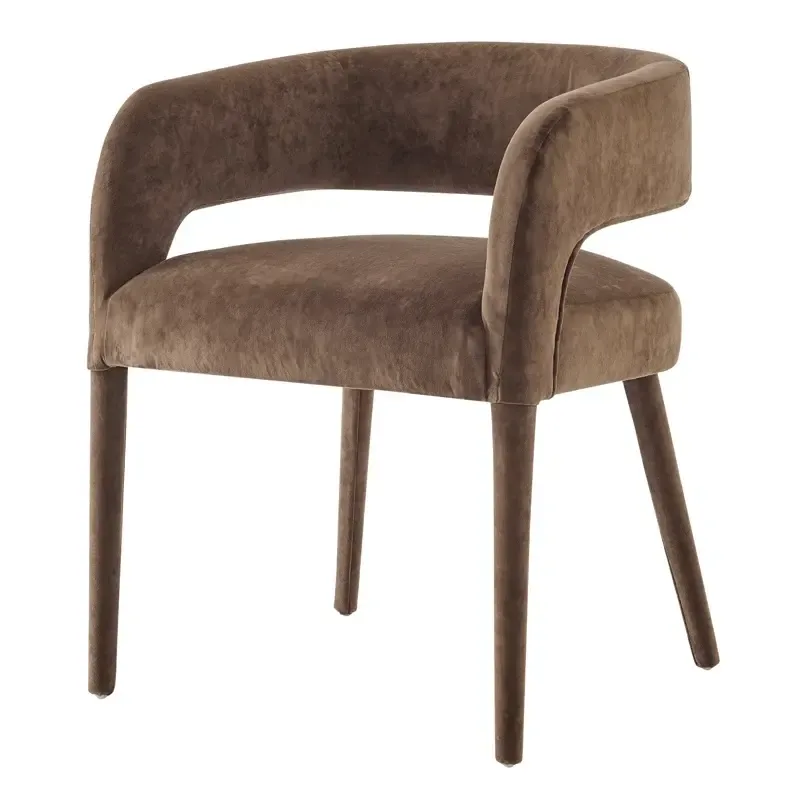 Wooden Chairs
Foshanchair Nordic Modern Luxury Dining Chair
Genuine leather · MOQ 6 pcs · $75
View model →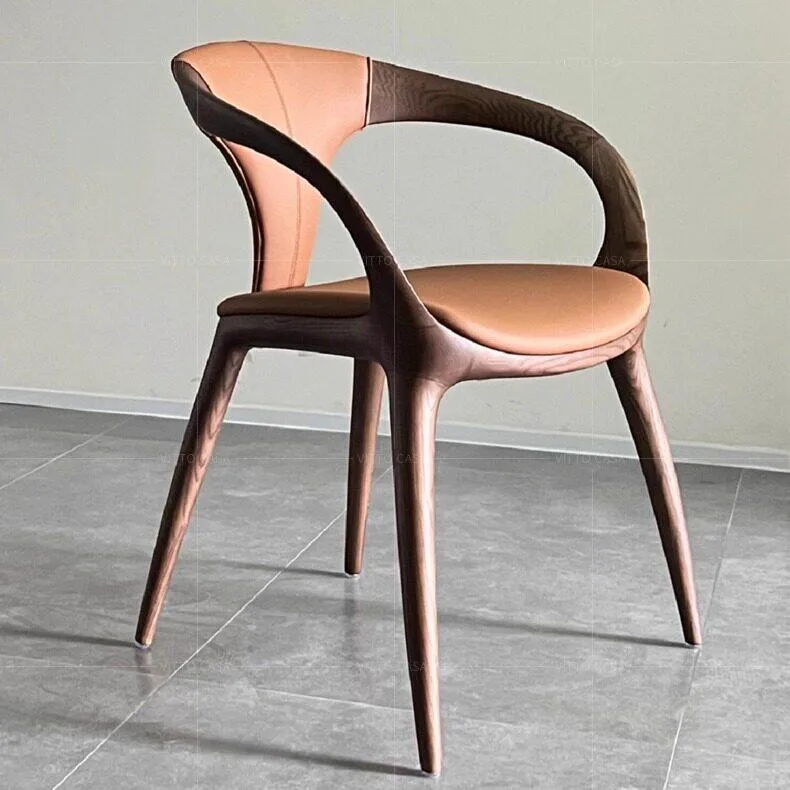 Wooden Chairs
Foshanchair Modern Solid Wood Frame Dining Chair
Microfibre · MOQ 4 pcs · $145
View model →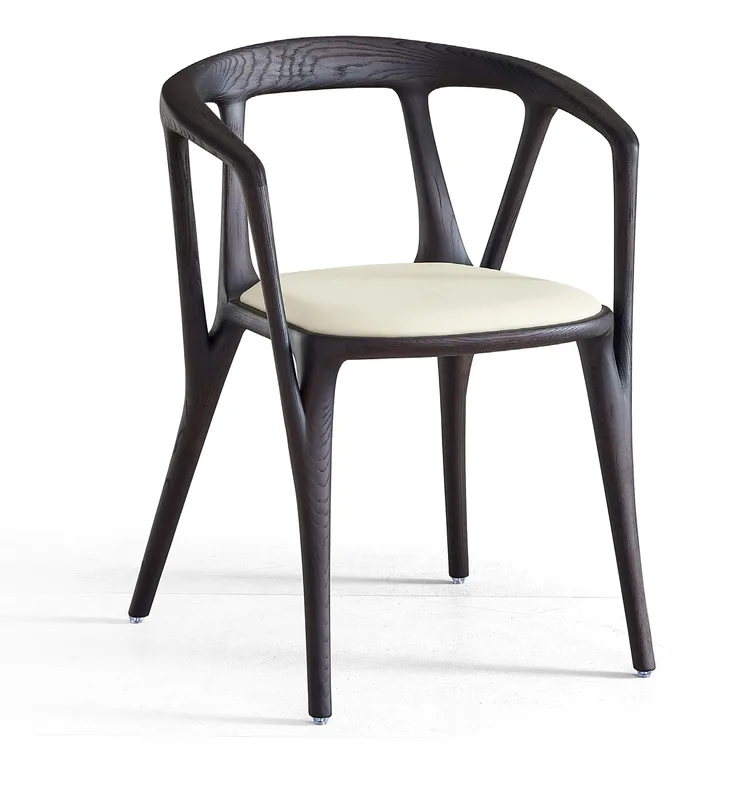 Wooden Chairs
Foshanchair Luxury Faux Leather Wooden Dining Chair
Solid wood · MOQ 6 pcs · $156
View model →