Chair Chemical Compliance: REACH and Prop 65
Published by Foshanchair · Substance compliance for contract seating, Foshan, China
Chemical compliance is the part of a chair order that never appears on a spec sheet, and it still stops containers. A frame can pass every strength test and be refused by an EU importer because the foam carries a restricted flame retardant, or sit in a US warehouse carrying an exposure nobody labelled. The rules do not work the way most buyers assume: one restricts substances, the other only requires disclosure, and neither is satisfied by a factory letter saying “eco-friendly”. This is the layer we check before a commercial restaurant chair order ships, and the documents we hand over with it.
1. Two regimes, two completely different logics
REACH restricts. If a substance is banned or capped above a limit, the article cannot be placed on the EU market at all, label or no label. Prop 65 does not ban anything: it requires a clear and reasonable warning unless the exposure falls below the published safe-harbour level, and it is enforced largely by private plaintiffs who file notices and settle. A US retailer can legally sell a chair with lead in the paint provided the warning is correct; an EU importer cannot sell that chair at any price. So the EU question is “is this allowed” and the US question is “is this disclosed”. One test report rarely answers both, because the EU set is built around material composition and the US set around exposure routes.
2. REACH: the 0.1 percent threshold and the SCIP file
The SVHC candidate list grows at least once a year and now runs past 240 substances. The trigger is 0.1 % by weight in the article as supplied — not in each material — which is why labs test homogeneous parts and the factory does the arithmetic on frame weight. Above that threshold, two duties fall on the EU supplier: pass information down the chain, and file a SCIP notification in the ECHA database, mandatory since January 2021. This is where buyers get caught. A Foshan factory has no EU legal entity and cannot file SCIP, so any supplier offering “SCIP included” is describing something they do not control. What the factory can deliver is a full material breakdown with weights for an upholstered leisure chair, which is what your importer needs to file.
3. Annex XVII: the entries that actually hit a chair
Four restrictions account for most chair failures. Azo dyes, entry 43, capped at 30 mg/kg on textiles and leather that touch skin, tested to EN 14362 — a risk with small mills and with leather from tanneries using banned amines. Nickel release, entry 27, limited to 0.5 µg/cm²/week on parts in prolonged skin contact, tested to EN 1811 and EN 12472 for coated finishes; plated arms and leg caps are the parts that matter, and the argument about whether a chair frame counts is not one you want to have at the border. PAHs, entry 50, capped at 1 mg/kg in rubber and plastic parts that touch skin — glides, arm caps, PVC edging. Lead, entry 63, capped at 0.05 % in articles sold to the public, which covers painted finishes and brass ferrules. Plating and coating questions concentrate on our iron chair range — the iron-legged leather chair is a typical case — and the OEM specification is where they get written down.
4. Formaldehyde in the panels nobody looks at
Seat decks and back panels on solid wood chairs are usually plywood or MDF, and that is where formaldehyde lives. In the US, CARB ATCM Phase 2 and TSCA Title VI at 40 CFR 770 set the limits: 0.05 ppm for hardwood plywood, 0.11 ppm for MDF and 0.13 ppm for thin MDF. In the EU, REACH entry 77, introduced by Regulation 2023/1464, has capped emissions from wood-based articles and furniture at 0.062 mg/m³ since 6 August 2026, measured by chamber test to EN 717-1. The certificate belongs to the panel mill, not the chair factory — the factory buys boards and passes the mill’s paperwork along. Ask for it by mill name and board thickness, because a chair can be comfortably E1 and still fail the new limit if a thin MDF back sits inside a closed frame. It is worth confirming on our beech dining chair, where the seat deck is the only panel in the piece.
5. Prop 65: reformulate, or label and live with it
The California list runs to roughly 900 chemicals. The ones that show up in seating are lead in paint and brass, DEHP and DINP in PVC, chlorinated flame retardants such as TDCPP in foam, formaldehyde from panels, and wood dust in the factory rather than the product. You have two routes: reformulate below the safe-harbour level, or warn. A compliant warning names at least one listed chemical for each exposure route, and can sit on a hangtag, on the packaging, or for e-commerce in the listing itself. Warning is legal and sometimes rational for cheap promotional seating. For contract furniture it usually is not: hotel and chain buyers refuse guest-facing labels, and private enforcers still send sixty-day notices that cost more to answer than the reformulation would have. The cheaper path is specification — no added flame retardants, phthalate-free PVC, water-based coatings — written into a velvet and leather upholstered chair order before the fabric is booked.
6. GPSR, evidence and the clauses worth writing
Since 13 December 2024 the EU General Product Safety Regulation has required an EU-based responsible person for consumer products, named on the product, its packaging and the online listing. CE marking does not apply to domestic furniture, so a CE certificate for a chair is paper. For evidence, insist on an ISO/IEC 17025 report issued per material rather than per model, matching the sample photos and the material names on your bill of materials; retest once a report passes twelve months, because formulations change quietly. A standard material set costs roughly USD 300–900 and takes five to ten working days, which is small against a hold at destination. Five clauses cover the rest: material breakdown with weights; REACH SVHC declaration per shipment; Annex XVII reports for dyes, nickel and PAH on the specified parts; CARB and TSCA Title VI certificates naming the panel mill; Prop 65 disclosure agreed before production. We keep that file with every order — our workshop ships it with the catalogue specification — and you can send your market and materials for a compliance check.
Conclusion
REACH asks whether a chair may be sold; Prop 65 asks whether its risks are disclosed; GPSR asks who in Europe is answerable for it. None of the three is satisfied by a general certificate, and all three are cheap to meet at the specification stage and expensive to fix after the container lands. Get the material breakdown, test per material at an accredited lab, name the panel mill on the formaldehyde paperwork, and write the five clauses into the order. Foshanchair builds to EU and US substance requirements as standard — tell us the destination and we will confirm what the order needs.
Related: Chair Test Standards: EN 16139 vs BIFMA · Chair Import Documents and HS Codes
Models we build for this
Material breakdowns and test reports issued with the order, MOQ from 6 pieces.
 Wooden Chairs
Foshanchair Beech Solid Wood Dining Chairs Thickened Load-bearing
Beech · MOQ 6 pcs · $45
View model → Wooden Chairs
Foshanchair Luxury Leather Dining Chairs Velvet Fabric
Ash wood · MOQ 50 pcs · Get Quote
View model →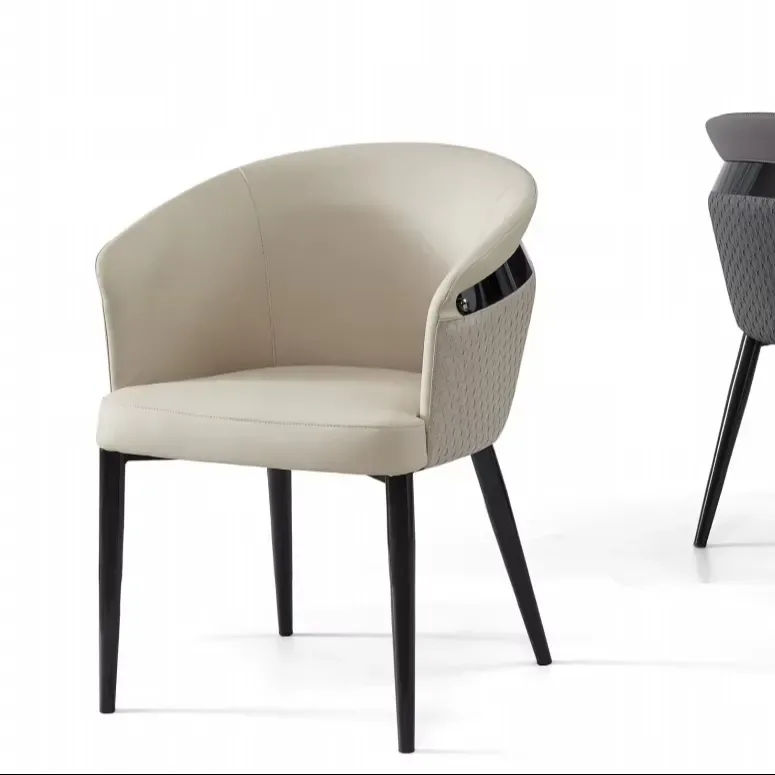 Iron Chairs
Foshanchair Model Iron-Legged Dining Chair Leather Upholstery
Stainless steel · MOQ 6 pcs · $85
View model →