Leather Lounge Chair Care and Repair
Published by Foshanchair · Chair studio in Foshan, China
A leather lounge chair is often the piece a guest remembers: it sits in the lobby or club lounge, it is used for twenty minutes at a time by people in coats and wet shoes, and it is the hardest-working soft seat in the building. It also fails quietly. Nothing snaps; the finish dulls, the seat front edge crazes, and the cushion loses its lift. The cause is usually a cleaning routine written for the wrong material, because "leather" covers at least five products with five different care rules. This guide covers how to identify what you own, how each type fails, and the schedule that keeps a leather lounge chair looking new.
1. Identify which leather you actually bought
Aniline leather is dyed through with no pigment coat, so it breathes, darkens with use and shows every mark. Semi-aniline adds a thin protective layer over a light pigment wash: a good middle ground. Pigmented or protected leather carries a polymer topcoat with the colour sprayed into it, and it is the commercial standard for hotel seating because spills wipe off. Split and bonded leather is the lower layer of the hide, or fibre pressed with binder and backed with fabric; it looks convincing in a showroom and delaminates at the arm and seat edges first. PU and microfibre are not leather at all. Two tests on a hidden panel settle it: a drop of water darkens aniline almost instantly and beads on pigmented leather, and the pore pattern shows a random natural grain versus an embossed print that repeats every few centimetres. Our top layer genuine leather lounge chair uses full hides with the grain intact.
2. Why lounge leather fails: four mechanisms
First, UV. Lounges live near glass, and daylight bleaches the dye and chalks the topcoat, which is why the chair nearest the window always ages fastest. Second, flex fatigue: every sit stretches the finish at the seat front edge, the arm tops and the backrest crown, and body oils and hand cream migrate into those creases until the topcoat crazes and splits. Third, ink and dye transfer from pens, magazines and dark denim, which will not lift with soap. Fourth, hydrolysis of bonded and PU material, where the foam backing breaks down and the surface lifts away from the panel. Note the pattern: three of the four sit in about ten per cent of the surface area, which is why a targeted weekly routine beats a monthly deep clean. A hotel lounge leather armchair built on a proper frame only suffers the first three.
3. Cleaning that does not strip the finish
Use a dedicated pH 5 to 7 leather cleaner, or a mild leather foam on pigmented hides, applied with a barely damp microfibre cloth. Work one panel at a time, wipe the residue with a clean damp cloth, then let the chair dry at room temperature, away from direct sun. Cleaner left in the grain attracts dust and turns grey. Never use saddle soap, dish detergent, alcohol, bleach or abrasive cream: they either dry the hide or strip pigment and leave a permanent lighter patch. Conditioner is the most misused item on the shelf: protected leather already has a topcoat, and feeding it monthly just leaves a sticky surface that collects lint. Condition twice a year at most, and only when the hide feels stiff. Aniline leathers take water and nothing else. Wipe the arm tops, seat front edge and backrest crown weekly on a cushioned leather accent chair, and vacuum the crevices with a soft brush head.
4. Ink, dye transfer, scuffs and small tears
Always test on the underside of the seat before touching a visible panel. Ink from a ballpoint lifts with a dedicated ink remover or a foam cleaner worked from the outside of the mark inwards on a cloth, never poured or sprayed onto the leather, because solvent migrating into the grain leaves a ring worse than the ink. Denim and magazine dye sit in the topcoat and need a professional clean with a colour-matched finish; sunlight accelerates the transfer, so treat it early. A scuff on pigmented leather is a loss of topcoat, and the fix is pigment plus sealer matched to the original colour code. On aniline there is no repair, only patina, and the honest answer is to leave it. For a small tear, patch it from behind with a flexible adhesive; never use cyanoacrylate, which sets hard, stains and tears further under load. Keep a touch-up kit matched to the order: leather lounge sofa chairs ship with their hide code so panels can be re-ordered later.
5. Foam, seams and the reupholster-or-replace decision
Most "the leather has gone flat" complaints are foam complaints. Contract lounge seating should use foam at 30 to 35 kg per cubic metre, and 40 or above at the seat front; cheap polyurethane collapses while high-resilience foam recovers. Test it: press the seat, hold for a minute, release, and see whether it comes back within a few seconds. Stitching is the second failure point, where thread has abraded against the frame or the panel was pulled too tight over a hard edge; hardware follows on swivel models. If the frame is sound, the foam is intact and the wear is cosmetic, replacing a single leather panel is the cheapest route. If the foam has collapsed and the hide is cracked across the flex lines at the seat edge, replacement is faster and usually cheaper than a rebuild. A well-built PU leather lounge chair can be reupholstered once in a long service life; budget for it on day one and read more about how we build them.
6. Fabric lounges, spares and purchase order clauses
Leather and fabric share the same floor, and fabric needs its own rules. Contract lounges in chenille, bouclé or wool should be rated at 40,000 Martindale cycles or more, and in public areas ask for Crib 5 or EN 1021 compliance. Fixed covers cannot be cleaned once liquid has reached the foam, so specify removable zipped covers with a colour-fast guarantee and keep replacements from the same dye lot. Treat a spill in order: blot, cold water, neutral cleaner, and solvent only as a last resort. For spares, per twenty lounges hold two spare covers in the matching dye lot, a touch-up kit with the colour code, one replacement foam insert and the fixings the model uses. Write it into the purchase order: leather type and grade, foam density, seam specification, the finish named as a standard rather than a colour word, and the spare percentage. See the OEM and ODM process or browse the full leisure chair range.
Conclusion
Leather lounge chairs rarely wear out from being sat on. They dull because they are cleaned with the wrong product, crack where ten per cent of the surface takes ninety per cent of the wear, and go flat because the foam was specified for a living room rather than a lobby. Identify the leather, clean with pH-neutral products, treat the touch points weekly, condition twice a year at most, and decide early between a panel repair and replacement. Foshanchair builds leather and fabric lounge chairs for hotels, clubs and reception areas, with hide codes and spare covers shipped alongside the order — request a quote with your seat count and we will match the leather to the room.
Related: Solid Wood Chair Care: Humidity and Joints · Restaurant Chair Maintenance Guide
Models we build for this
Factory-direct pricing, custom finish and fabric, MOQ from a few pieces.
 Leisure Chairs
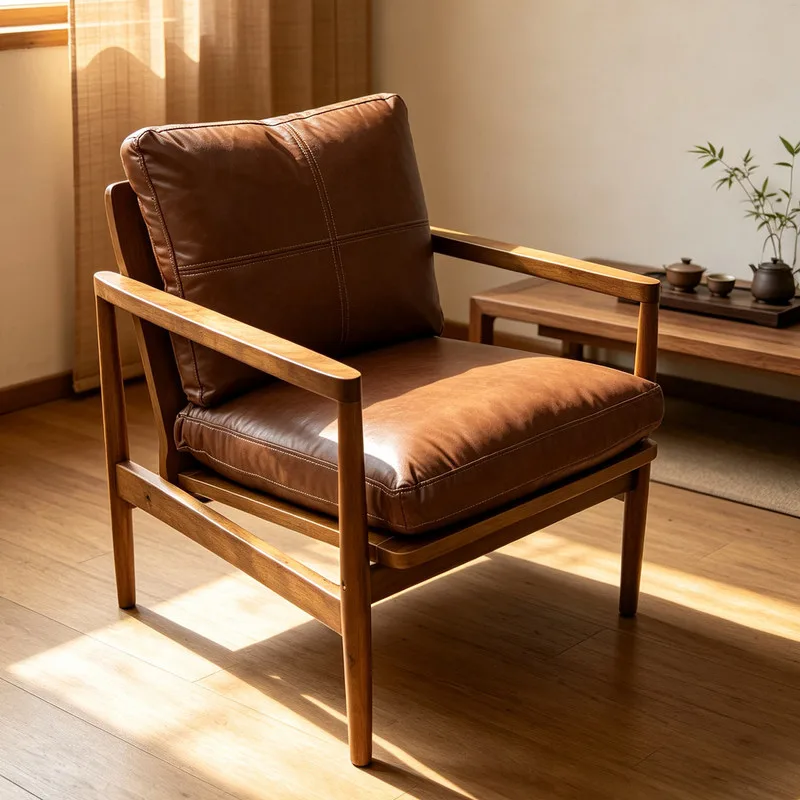
Foshanchair Top Layer Genuine Leather Sofa Chair
Top layer leather · MOQ 2 pcs · $210
View model →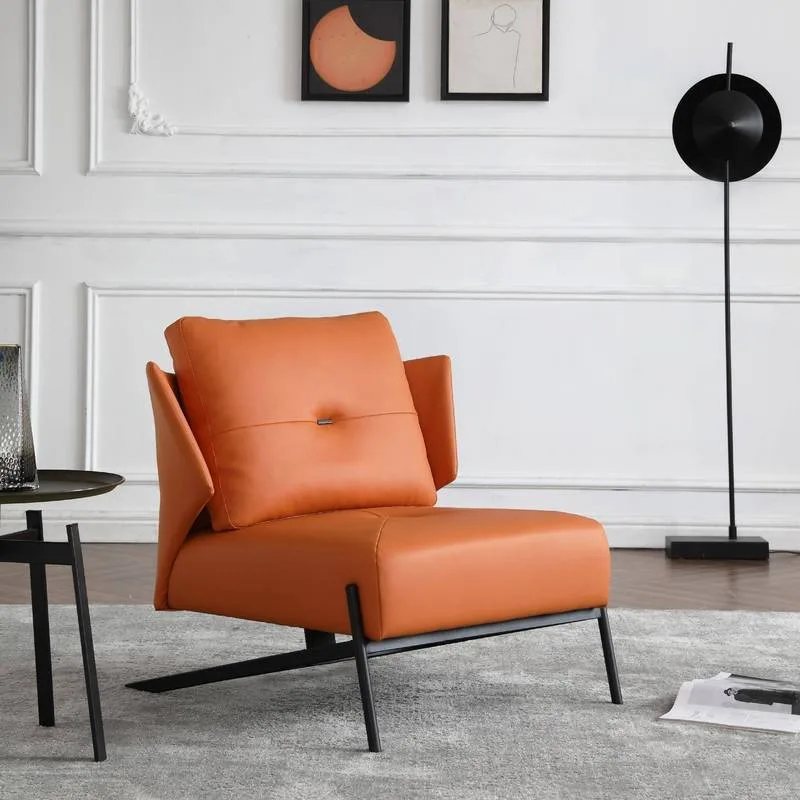 Leisure Chairs
Foshanchair Hotel Luxury Leather Lounge Chair
Hotel grade leather · MOQ 2 pcs · $328
View model →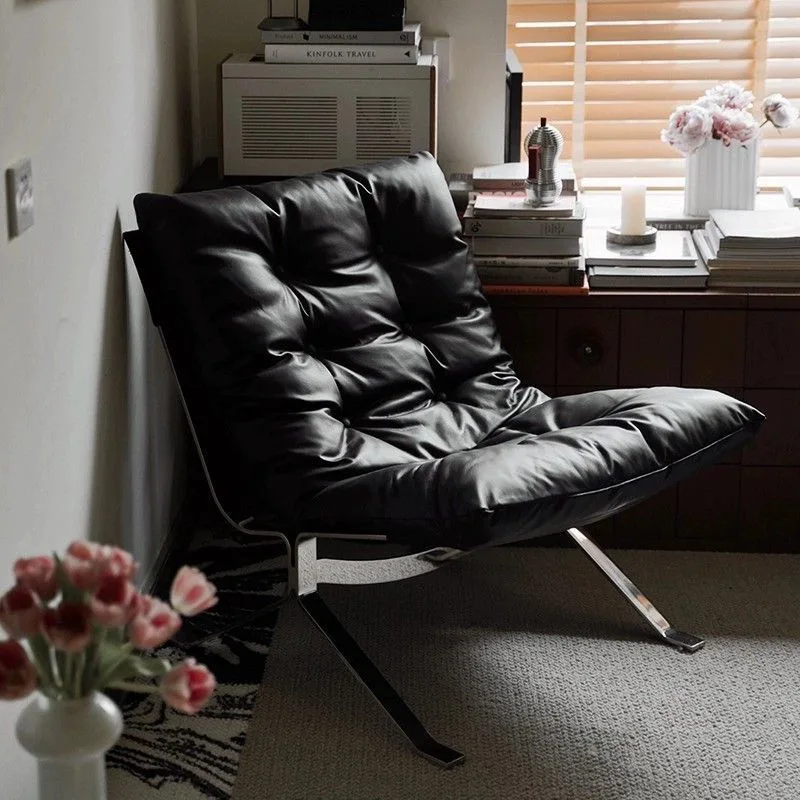 Leisure Chairs
Foshanchair PU Leather Lounge Chair with Metal Frame
PU leather · MOQ 4 pcs · $249
View model →