Steel vs Aluminum Chair Frames: Which Lasts Longer?
Published by Foshanchair · Metal frame workshop in Foshan, China
Two patio chairs can look identical in a catalogue photo and be built from different metals: one from welded steel tube, one from aluminum extrusion. The difference shows up on a scale at the loading dock, and again in year three when one frame is still square and the other has rust streaks running out of the welds. Buyers usually meet this choice as a price gap — a steel-frame wicker chair can quote at $15–25 while the aluminum equivalent sits at $45–90 — and the tempting conclusion is that aluminum is the premium option and steel is the budget one. That is only half true. Which frame lasts depends on where the chair lives, how often it is handled and what the coating is doing. Here is the arithmetic behind the choice, and the checks you can run on a sample in ten minutes, from the same frames we build at our Foshan workshop.
1. The two metals fail in completely different ways
Steel has a density of about 7.85 g/cm³ against 2.7 for aluminum, so an equal tube in steel weighs roughly 2.9 times as much. Steel is also stiffer — a modulus near 200 GPa against 70 — which is why a thin steel tube holds its shape where a thin aluminum tube dents. The failure modes follow from that. Steel fails from the outside in: the coating is breached at a cut end, a weld spatter or a stack scratch, moisture reaches bare metal, and rust lifts the paint from underneath. Aluminum fails at its weakest geometry: it dents rather than bends back, the heat-affected zone beside a weld loses temper, and trapped dirt holds water against the surface until it pits. Both fail at the joints first. If you are buying for a covered terrace, steel is a rational choice; for an exposed or coastal site, the outdoor chair range is mostly aluminum for exactly this reason.
2. Ten minutes of checks on a sample
You do not need a lab to separate a commercial frame from a decorative one. Start with a magnet: steel tube grips it hard, aluminum does not react, and 304 stainless is only faintly magnetic at cold-worked welds. Then weigh the chair and compare it with the stated weight — a wicker armchair under 5 kg with a metal frame is a light-duty product. Take a caliper to the tube end where the plug or cap comes off: typical commercial steel runs 0.8–1.2 mm and aluminum 1.2–2.0 mm, and anything below 0.8 mm in steel is cosmetic. Look at the cut ends, because a bare, unpainted tube end is where corrosion starts on the first wet night. Finally, press down on one seat corner and listen: a creak means a bolted joint working loose, which is repairable, while a crack at a weld is not. The full chair catalogue lists wall thickness and frame material per model once you know which questions to ask.
3. Wall thickness matters more than the material name
“Aluminum” and “steel” are categories, not specifications. Aluminum tube is usually 6061-T6 or 6063-T5, and the difference matters: 6061-T6 is stronger and welds less gracefully, 6063 takes anodizing better and is the common choice for furniture. Steel is typically Q195 or Q235 in this industry. Ask for alloy and temper in writing, then ask for the wall. Bending stiffness climbs steeply with wall thickness and with tube diameter, so a 1.2 mm oval aluminum tube can be stiffer than a 1.0 mm round steel tube at about 40 percent of the weight. What thinner metal cannot do is resist a point load: drop a 5 kg weight on the seat and look for a permanent set. Commercial seating is normally specified to EN 16139 Level 2 with a 150 kg seat load in the report — our guide to chair test standards explains how to read that document rather than just filing it.
4. Where each frame actually corrodes
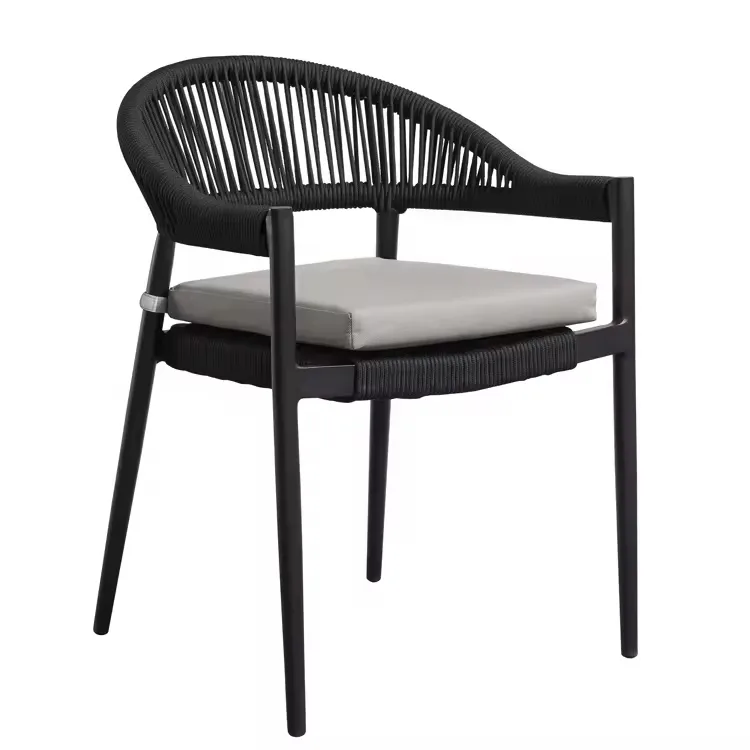
On steel, corrosion is a coating problem: cut ends, weld spatter, edges where the powder thins, and scratches from stacking. Powder coat should be polyester at 60–100 µm over a conversion coating, not epoxy, which chalks and fades in ultraviolet light. On aluminum, corrosion is a water-trap problem. The oxide layer protects the face, but dirt and leaves held in a joint create poultice corrosion, salt air pits 6063 tube on coastal sites, and a plated steel bolt threaded into an aluminum frame sets up galvanic corrosion at the contact point. Specify A2 or A4 stainless hardware with nylon isolating washers, and rinse coastal frames monthly; the cleaning sequence is in our patio chair maintenance guide. A powder-coated steel frame with a sound coating and stainless hardware, like this all-season wicker dining chair, handles a covered terrace for years without drama.
5. Welding, repair and who fixes it locally
Repairability is the cost line buyers forget. Steel is welded with MIG in seconds and any fabrication shop within driving distance can re-weld a cracked leg for the price of a lunch. Aluminum needs TIG and an AC machine, and the heat-affected zone beside the weld drops out of temper, so a field repair is usually a plate, a rivet or a replacement frame rather than a clean weld. Cast aluminum bases crack instead of bending, and a cracked casting cannot be repaired at all. That difference matters most in hospitality, where a chair is out of service the moment it wobbles. Ask whether the frame is welded or bolted: bolted frames with threaded inserts are field-serviceable and worth the small premium on high-turnover sites. Our joint construction guide covers what to inspect at each connection, and the OEM service can specify a bolted variant if your maintenance team prefers it.
6. Weight, stacking and cost per seat
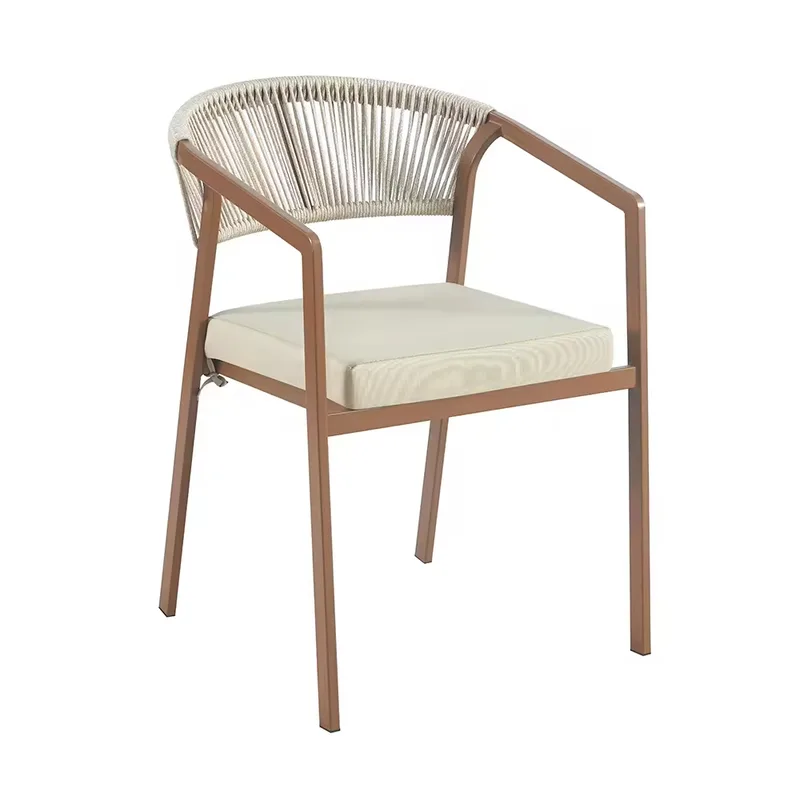
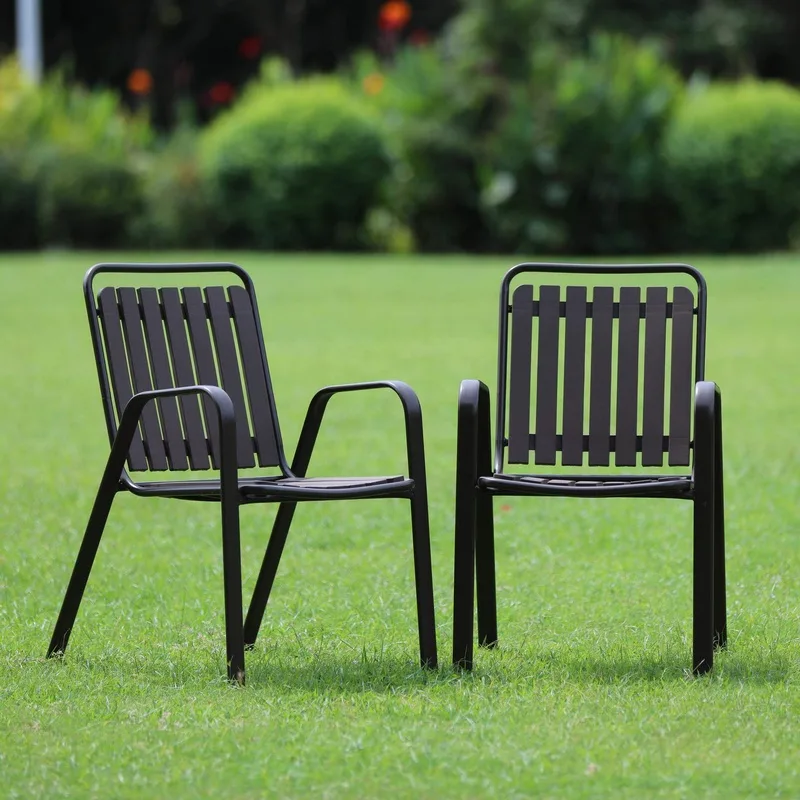
For the same silhouette, expect 4.5–6 kg in aluminum and 8–12 kg in steel. Staff move a chair thirty or more times in a single service, and a stack of ten steel chairs is a two-person lift; that is a labour cost, not a comfort detail. Sea freight rarely decides the question, because chairs cube out before they weigh out — but a lighter frame often stacks taller, which changes the container maths. On price, powder-coated steel with a wicker seat runs $15–40 and aluminum $36–140 depending on weave and finish. Run the five-year line: replacing $20 steel chairs every two to three years on an exposed terrace costs more than one $70 aluminum chair that survives, while under a canopy the steel chair is simply cheaper. For a mixed terrace, split the order — steel in the sheltered zone, aluminum at the edges — as in this aluminum rope chair and a stackable commercial patio chair pairing.
Conclusion
Steel is stiffer and cheaper per seat; aluminum is lighter and far more forgiving of a scratch, a coastal wind and a careless stacker. Decide by exposure and handling first, then by wall thickness and coating — never by the word on the spec sheet. Foshanchair builds both substrates in the same workshop, so we can quote the same silhouette in either and tell you where each one will fail. Send us your site conditions and chair count and we will recommend a frame spec with the wall thickness written in.
Related: Outdoor Patio Chair Material Guide: Rattan, Aluminum and Wood · Iron vs Stainless Steel Chairs
Models we build for this
Factory-direct pricing, custom finish and fabric, MOQ from a few pieces.