Outdoor Patio Chair Maintenance: Rust, Mildew and Winter Storage
Published by Foshanchair · Chair manufacturing studio in Foshan, China
Outdoor seating lives in the worst conditions your venue can offer: rain on the terrace, salt in the air, thirty-five degree sun in August and frost in January. Two identical chairs bought on the same order can be a three-year asset or a ten-year asset, and the difference is rarely the purchase price — it is the twenty minutes a month nobody spends on them. This guide covers what actually fails on outdoor chairs, how to stop a chip becoming a rusted frame, how to keep cushions from turning into a hygiene problem, and how to shut a terrace down for winter so it opens the same way in spring. If you are still choosing models, start with our outdoor chair range.
1. What actually fails on outdoor chairs
Four things break outdoor chairs, and they fail in sequence. Coating breaches come first: a chip at a weld toe, a worn foot glide, a scratch from stacked storage. On powder-coated steel that breach creeps underneath the film, and a three millimetre nick becomes a thirty millimetre blister within a season. Water in joints and cushions follows: timber that never dries, foam that stays damp, mildew that starts on the underside of a seat pad where nobody looks. UV degradation is the slow one — resin wicker chalks, rope loses colour, plastic slats go brittle at the corners. Dissimilar-metal corrosion finishes the job: a zinc-plated bolt in a stainless frame, a steel bolt in an aluminium leg, and the rust stain appears on your paving before it appears on the chair. Each failure opens the door to the next, which is why inspection cadence matters more than any single component.
2. Frames: powder coat, welds and fasteners
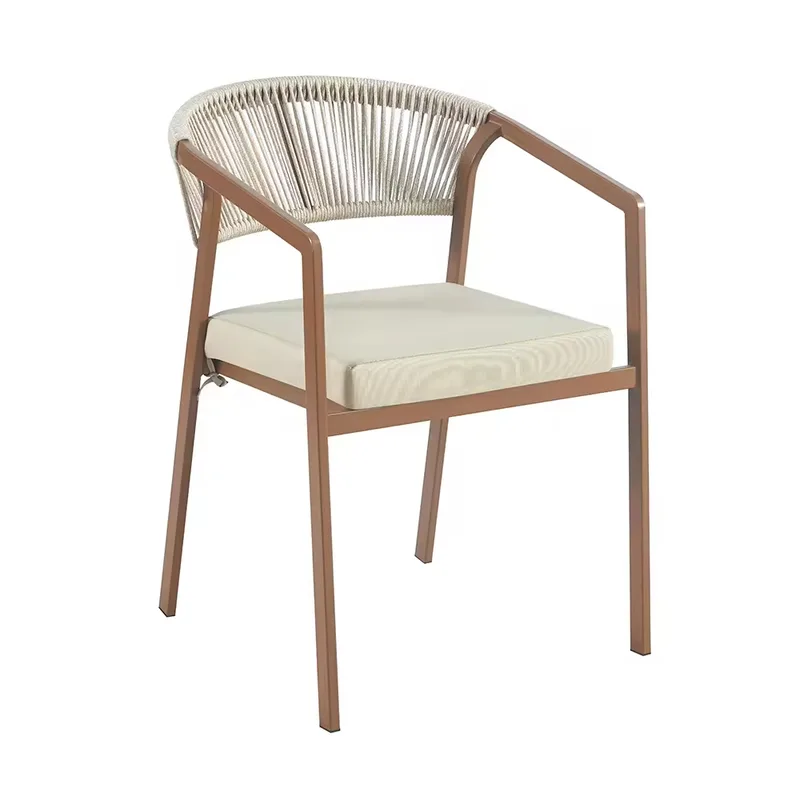
Give steel and aluminium frames a five-minute inspection every month and concentrate on four places: weld toes, foot caps, armrest junctions and anywhere the frame touches the ground. Where you find bare metal, clean back to sound coating, feather the edges, spot-prime and touch up with a colour-matched two-part epoxy aerosol within a day or two — the repair bonds far better to a dry, clean surface than to a rust bloom. Do not improvise with automotive wax or oil; they trap grit and lift the edge of the film, and the repair fails wider than the original chip. Foot glides and caps are sacrificial and are the cheapest part on the whole chair: replace nylon glides when they wear through to metal, never after. Check every bolt once a season with a spanner, and on coastal terraces upgrade zinc-plated fasteners to A2 or A4 stainless and rinse salt off weekly with fresh water. A genuinely all-season frame such as this powder-coated rattan dining chair is built for that routine; the routine is what keeps it that way.
3. Resin wicker, rope and plastic
Wicker and rope are not fragile, they are simply damaged by the wrong cleaning. Wash with a soft brush, warm water and mild soap, then rinse. Never pressure-wash above roughly sixty to eighty bar, and never reach for solvent, thinner or a strong alkaline degreaser — they attack the UV stabilisers that keep the strand from going chalky. On HDPE wicker, faded colour is cosmetic; cracks and brittleness are structural and mean that strand is finished. Loose strands should be re-clipped or re-tied rather than glue-gunned, because glue fails in the first hot week. Woven rope needs its tension checked once a year and its end bindings inspected, since one frayed end works loose quickly once it starts. HDPE and polywood slats expand and contract with heat, so confirm the fasteners every season. Durable pieces like this stackable aluminium rattan chair will outlive several sets of cushions provided the frame and the weave are kept sound.
4. Cushions, foam and textiles
Cushions are the shortest-lived part of any outdoor set and they fail from the inside. Open-cell foam holds water and never dries, which is how a seat pad becomes a mould reservoir that smells after every rain. Closed-cell polyethylene or quick-dry reticulated foam drains and recovers, and is what you want on any chair that stays uncovered. Look for drainage grommets, a slatted or mesh seat that lets air move under the pad, and covers that unzip for washing. Surface mildew is a cleaning problem: use diluted oxygen bleach, or a weak bleach solution on solution-dyed acrylic, then rinse and dry fully in the sun. Mildew inside the core is a replacement. Never store cushions in a sealed plastic bag, because the condensation does more damage than the rain they were hidden from. For pieces that stay out all season, choose a waterproof patio chair with a removable cushion and budget for a spare set from day one.
5. Winter shutdown and storage
Most outdoor furniture destroyed over winter is killed by trapped moisture rather than cold. The shutdown routine takes an afternoon. Wash and dry the frames completely, because a cover draped over a damp chair guarantees a mould bloom underneath it. Finish any touch-up paint while the surface is dry and the temperature is above roughly ten degrees. Take cushions indoors, cleaned and bone dry, stacked loosely in breathable cotton or a woven bag. Stack chairs with cardboard or foam interleaves so coating never rubs against coating, and lift the whole stack onto pallets or shelving instead of bare concrete, which wicks moisture upward all winter. A breathable cover beats a sealed one, and shrink wrap on a terrace simply traps condensation. Coastal sites should rinse salt off before storage, wooden models should be checked for dryness and given an annual oil or sealer before the wet months. Store in rotation, so the same four chairs are not always at the bottom of the stack. Lightweight stackable models such as this commercial resin stacking chair make that rotation practical.
6. Spare parts and reorder planning
You cannot maintain what you cannot replace, so treat consumables as a line item from the first order. A practical shelf holds foot glides and caps at five to ten per cent of seat count, A2 stainless bolts and washers in the two sizes your frames actually use, a can of colour-matched touch-up paint for every finish in service, and one spare cushion set per ten to twenty seats. On rope and wicker models, ask for a spare strand or two from the same batch. When you reorder, quote the original order number and the finish code rather than a photograph, because dye lots and powder batches shift between runs. Budget repair as a cadence rather than a project: an annual touch-up pass across a terrace costs a fraction of one restoration five years later. It is the same logic we recommend for indoor seating in our restaurant chair maintenance guide.
Conclusion
Buy the frame, maintain the cushion, and plan for the parts in between. A terrace set is a cheap asset to keep and an expensive one to replace, provided somebody owns twenty minutes a month and a shelf of glides. If you would rather have that written into the order than improvised afterwards, send your models, seat counts and climate through our contact form and we will quote a care kit, spare cushions and consumables alongside the chairs — including OEM frames finished to your own powder colour. Our Foshan workshop supplies hospitality projects year round.
Related: Outdoor Patio Chair Material Guide · Restaurant Chair Maintenance
Models we build for this
Factory-direct pricing, custom finish and fabric, MOQ from a few pieces.
 Outdoor Chairs
Foshanchair All Season Powder Coated Metal Frame Rattan Wicker Waterproof Balcony Outdoor Dining Chair
Powder-coated steel · MOQ 10 pcs · $38
View model →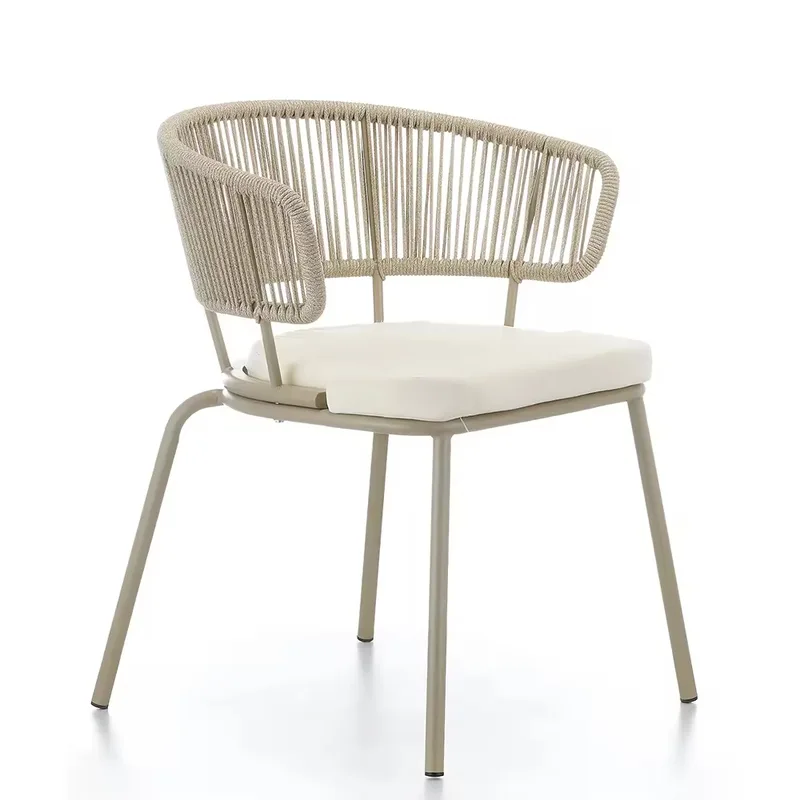 Outdoor Chairs
Foshanchair Modern Wrought Iron Woven Rope Cushion Waterproof Patio Bistro Furniture Outdoor Dining Chair
Wrought iron · MOQ 10 pcs · $75
View model →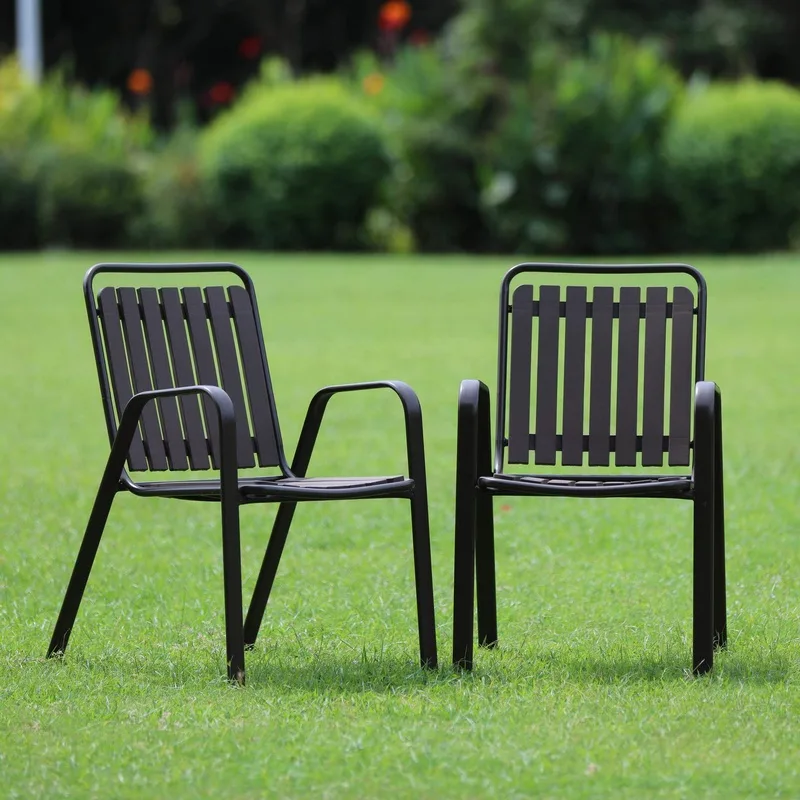 Outdoor Chairs
Foshanchair Modern Lightweight Commercial Resin Stackable Outdoor Dining Slat Design Weatherproof Hotel Park Patio Poolside Garden Chair
Weatherproof resin · MOQ 10 pcs · $28
View model →