Iron vs Stainless Steel Chairs: Which Should You Buy?
Published by JP · Dining chair studio in Foshan, China
Specifying chairs for a new venue or a replacement cycle usually comes down to one question: powder-coated iron or stainless steel? Both are welded metal frames, both take upholstery, and both are quoted by the same Foshan factories — yet they fail in different ways and pay back differently over five years. This comparison lines the two specs up on cost per seat, corrosion, weight, appearance, repair and end of life, so you can choose the frame your operating model needs rather than the one that photographs best, starting with the same commercial restaurant chairs buyers shortlist.
1. What the two specs actually mean
On a factory spec sheet, iron almost always means mild-steel or carbon-steel tube, bent, welded and finished with powder coating — normally 60–100 microns of polyester or epoxy-polyester over a phosphate or zinc primer. Stainless means a 304 (or cheaper 201) tube, usually polished, satin-brushed or PVD-coated, with no paint film at all. That single difference drives everything else in this comparison.
Powder coating is a barrier: it protects the steel as long as the film stays intact. Stainless is a barrier by nature: its chromium oxide layer re-forms after a scratch, provided the grade is right and the welds have been passivated. Wall thickness matters more than the label — a 1.2 mm tube outlasts a 0.8 mm one, as you can see comparing the powder-coated iron range with the 304 stainless steel range.
2. Cost per seat and the five-year number
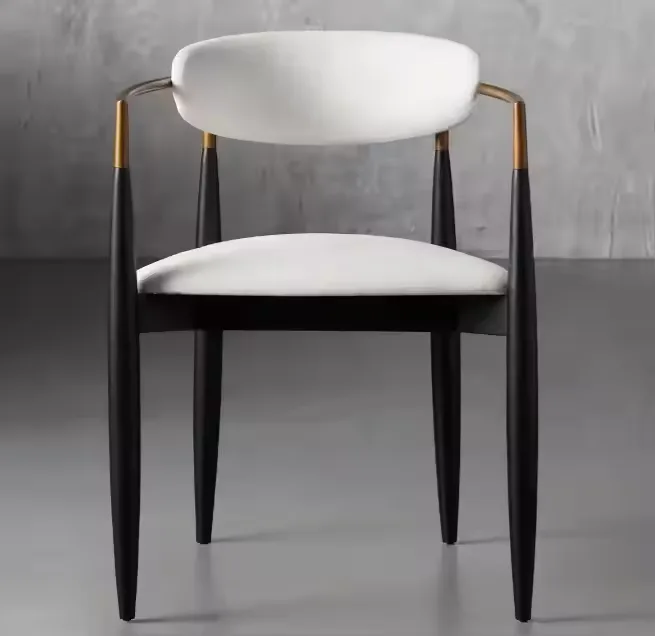
At factory level, powder-coated iron side chairs typically quote from about US$25 to US$60 per piece at MOQ, while 304 stainless models open near US$70 and reach US$200 or more once solid bar, cast details and heavier upholstery are involved. On a 120-seat room that gap is real money — roughly US$3,000 to US$6,000 on the purchase order alone. A budget iron chair such as this metal frame dining arm chair at around US$45 and a comparable thickened stainless steel frame around US$70 show how the bands overlap at the entry end.
The five-year view narrows the gap. Powder-coated frames in busy venues lose finish first on footrests, armrest edges and stacking contact points; refinishing means stripping, re-pretreating, re-coating and losing the chairs for two weeks, so most operators replace instead. Passivated stainless normally needs nothing beyond cleaning and an occasional polish. Add the labour and downtime and the lifetime difference lands far below the sticker difference.
3. Corrosion: where each material fails
Powder-coated steel fails at the film, not in the metal. A chip or a scratch from a stacking trolley exposes bare steel and rust blooms outward under the coating. Grade 201 stainless fails differently: it has less nickel and more manganese, so it survives indoor humidity but stains and pits in coastal air or in rooms that are mopped with chlorinated cleaners every night. Grade 304 resists that; 316 adds molybdenum and is the safe answer for direct salt exposure and poolside use.
Two workshop details decide whether stainless actually performs. First, welded zones lose corrosion resistance unless the factory passivates them with citric or nitric acid — ask for the step in writing. Second, never mix metals: stainless fasteners and nylon or stainless washers on a stainless frame, because a galvanised screw in a wet stainless foot corrodes both. If your project is half indoor and half terrace, run the checks in our outdoor patio chair range before you assume one spec covers both zones.
4. Frame weight, stability and stacking
Stainless chairs usually come out 20–40 percent heavier than an iron chair of the same seat size, because factories build them to a heavier gauge and often use solid bar legs or cast backplates. That weight works for you at the table — a heavier frame resists wobble, resists tipping when a guest leans back, and holds its geometry through years of dragging. Against you: staff reposition them more slowly, and the stack-and-unstack cycle wears glides faster.
Weight also moves freight. A 40HQ container holds roughly 400–600 stacked powder-coated metal chairs but noticeably fewer heavy stainless models, so the per-seat landed cost gap widens on a full container. Light iron frames are the better answer for high-turnover rooms, movable terraces and event layouts; stainless suits fixed fine-dining rooms. Bar height amplifies the point — a light iron bar chair is easy to swing out, while a heavy stainless stool in the bar stool range needs a proper footrest and a stable base to feel secure.
5. Appearance and design freedom
Powder coating takes any RAL colour, matte, textured or metallic, which makes it the practical choice when a brand palette, wall colour or banquette fabric has to be matched. It also suits the thicker, folded tube profiles most sculptural metal dining chairs use. The trade-off is batch colour: powder lots vary slightly, so order spares with the main run.
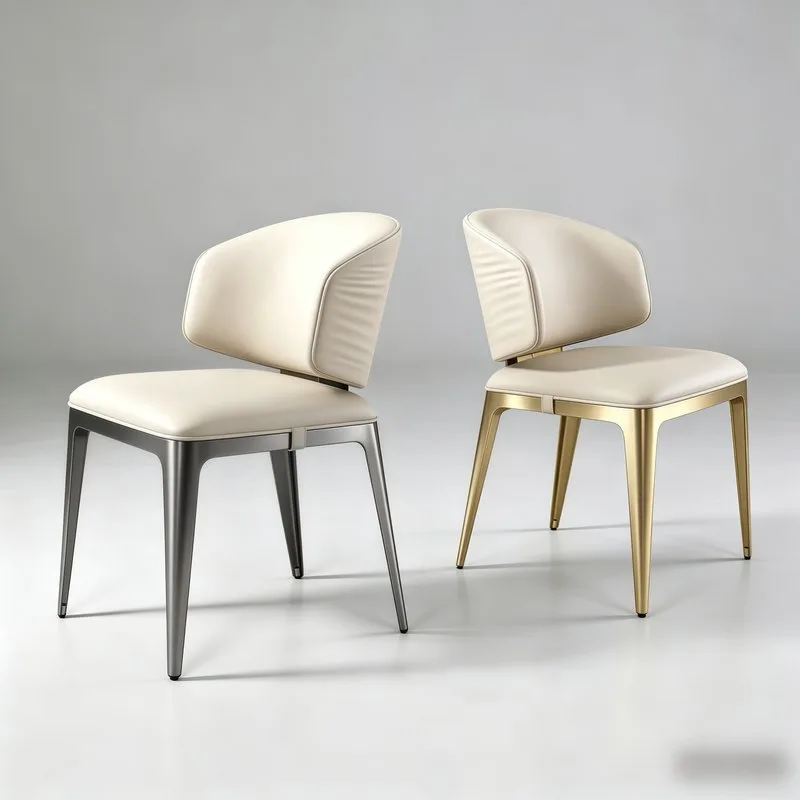
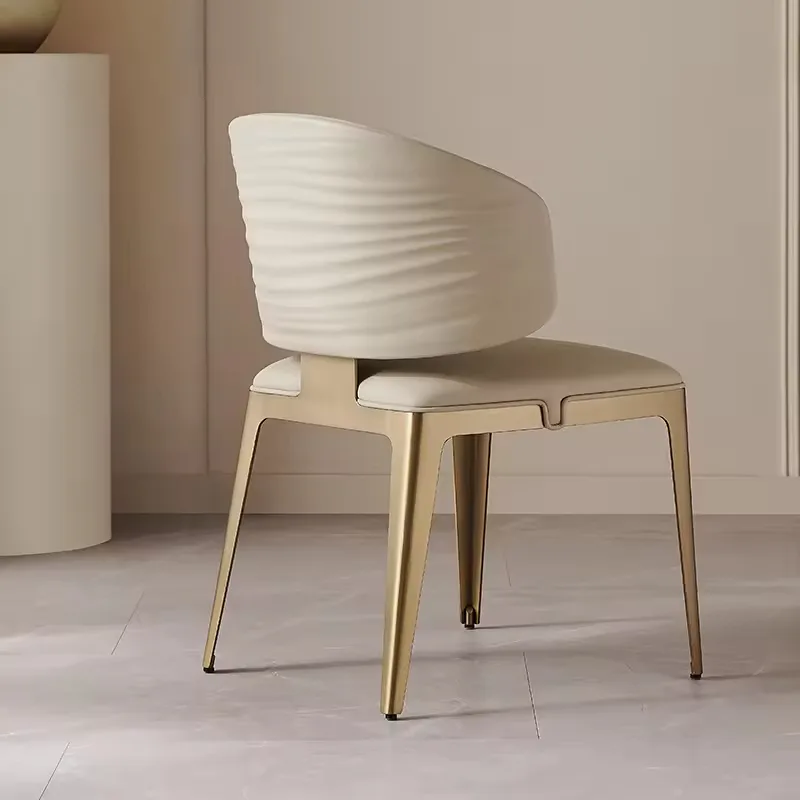
Stainless trades colour range for surface quality. Mirror polish reads premium and hides nothing; satin brushing is more forgiving in daily use; PVD coating adds gold, rose gold and black while keeping a metal surface. Options are wide at the top end, from a gold stainless armrest chair to a classic gold stainless leg dining chair, but mirror finishes show fingerprints in a dining room and welds must be polished out, not filled.
6. Repair, spares and end of life
Repair paths differ. A chipped powder coat should be treated within days: clean the chip, remove the rust bloom, spot-prime and apply two-pack touch-up paint in the original RAL. It will never be invisible, but it stops the rust creep that turns a 5 mm mark into a replaced frame. Stainless is repaired by re-brushing along the grain, and any welding should use matching 308L filler followed by re-passivation. A simple 304 stainless backrest chair is a good example of a frame that can be restored rather than replaced.
Whichever you pick, buy 5 percent spares on the first order and file the spec sheet — model code, tube gauge, RAL or finish reference, fabric dye lot, foam density and the revision number of the approved drawing. That single document is what lets a supplier like our OEM and ODM team ship a matching top-up eighteen months later, when a replacement that does not quite match looks like a repair instead of furniture. Both are recyclable at end of life, and stainless carries the higher scrap value.
Conclusion
Choose powder-coated iron when the room is dry, the turnover is high, the colours must match a brand palette and the budget is per-seat sensitive — and accept that you will refinish or replace some frames after three to five years. Choose 304 stainless when the venue is premium, humid, coastal or washed nightly, and accept the higher entry price and heavier handling in exchange for a frame that mostly needs cleaning. Many projects end up with both, split by zone. Our chair catalogue lists gauge, finish, MOQ and pricing model by model, and the JP studio will review a spec sheet against your floor plan — send us your seat count and location and we will tell you which frame earns its keep.
Related: How to Choose Iron Restaurant Chairs · Stainless Steel Chairs: 304 vs 201 Grade
Models we build for this
Factory-direct pricing, custom finish and fabric, MOQ from a few pieces.