Lumber Grades for Chair Frames and Yield
Published by Foshanchair · Chair manufacturer in Foshan, China
A chair sold as "FAS oak" is not automatically better built than one in No.1 Common ash. Lumber grades describe how much clear wood a board holds on its worse face. They say nothing about strength, drying, colour, or whether the parts the chair actually needs can be cut out of that board. Buyers meet the subject in two ways: a quotation that jumps when they ask for a better species, or a leg with a knot exactly where the tenon has to go. Learning what the grade measures, and what a chair part needs, turns that argument into a specification. The species question is in our solid wood dining chair guide; this is about the board behind it.
1. A grade measures clear cuttings, on the worse face
Under the rules US hardwood graders work to, every board is judged on its own, on the face with more defects, and measured in board feet. The grader counts clear cuttings — rectangles of defect-free wood above a minimum size that could be sawn out — and reports them as a percentage of the surface. Knots, wane, pith, checks, splits, stain and machine tear-out all break a cutting. Two things follow. A board can be flawless on the face you will see and still be graded on the face you will not. And the grade never says whether a 45 mm leg blank can come out of it, because that depends on where the defects sit: a No.1 Common board with one clean edge yields more legs than an FAS board with a knot in the middle. That is the gap between the wooden chair range you see and the timber it came from.
2. The ladder, and what each step costs
FAS demands 83⅓ percent clear cuttings on a board at least 6 inches wide and 8 feet long; FAS one face applies the same figure to one face with FAS on the reverse; No.1 Common drops to 66⅔ percent at 3 inches by 4 feet; No.2A Common to 50 percent; No.3A Common to 33⅓ percent. Prices step roughly 15 to 30 percent per grade in most species. For a buyer, three rungs matter. FAS and FAS one face for wide stained surfaces. No.1 Common for almost everything else, painted. No.2A for internal blocks, corner braces and cleats nobody will see. Buying higher than the part requires is the most common way to overpay on timber — and the easiest to correct, because it costs nothing to change a line in a purchase order.
3. Your requirement is a clear part, not a grade name
A side chair leg finishes around 45 by 45 mm, so the rough blank is about 50 by 50 by 470 mm. That part needs a continuous clear strip 50 mm wide over its full length — a fraction of what FAS asks for across a 150 mm board. A one-piece seat 450 mm wide is the opposite case: it needs a genuinely wide clear face, and at that width you are choosing between FAS and a glued panel of narrower boards. This is why a sensible specification is written part by part. Grain direction matters as much as grade. Legs should be rift or quarter sawn, which puts the growth rings at 60 to 90 degrees to the face and keeps a leg straight through a heating season; a plain-sawn leg shows the cathedral grain that cups. Check the beech models in our catalogue, such as the beech solid wood dining chair, to see legs cut this way.
4. Yield is where the quote is won
Nobody buys boards; they buy parts. Net yield from rough lumber to finished chair parts runs about 45 to 60 percent once you allow for defect trimming, end checks and snipe, machining allowance, and a 3 to 4 mm kerf on each of the twenty to thirty cuts in a chair. A side chair carries roughly 0.010 to 0.014 m³ of finished parts, so it consumes 0.018 to 0.028 m³ of lumber. At $400 per m³ for rubberwood that is $8 to $11 of wood in the chair; at $1,100 for white oak it is $20 to $31; walnut at $2,000 reaches $36 to $56. Two habits follow. Convert everything to one unit first — a cubic metre is about 424 board feet on the one-inch basis, so $2.50 per board foot is near $1,060 per m³. Then compare cost per finished chair, never per cubic metre, because a curved back stile wastes three times what a straight stretcher does.
5. The finish decides the grade you need
An opaque painted chair hides sound knots, filled and sanded, and it hides colour variation between boards. That combination lets a painted programme run on No.1 Common throughout and still look correct after five years of service. Stain and clear lacquer do the opposite: they amplify whatever the board already contains. Sapwood takes stain darker and flatter than heartwood, so a stained chair needs colour-sorted lumber, not simply a higher grade — FAS boards from the same pack can still clash. Walnut adds a second choice: steamed, which evens the colour to a purple-brown, or unsteamed, which keeps the grey-brown sapwood contrast. Rubberwood deserves its own rule, because it stains blue-grey if it is not kiln dried within days of felling, and no finish covers that. Write the reject rule for blue stain explicitly; the wider colour method is in colour matching across reorders.
6. Put it in the PO, then check the sample
Grade names alone will not hold a supplier to anything, so the purchase order should carry five things: the botanical species, which stops substitution quietly passing as the trade name; a grade per part group rather than per order; moisture of 8 to 12 percent measured on machined parts; defect rules stated as rejections — no pith, no wane on a visible face, no blue stain, no check over 1 mm, sound knots only on hidden faces and under 6 mm; and a sampling rate, typically 5 percent of parts or ten pieces per hundred. Then verify on the sample, not in a photograph. Look at end grain for a dark pith core, which is where a leg will split. Sight along each leg for grain runout, which reads as a spiral and predicts a warp. Check that no pale sapwood stripe shows on a stained face. Our OEM team writes these clauses into every custom programme, and the same logic runs through the full chair catalogue.
Conclusion
Lumber grading is a measurement of clear wood in a board, not a promise about a chair. Specify the part, not the grade name; match the grade to the finish that will cover it; convert board feet to cubic metres before comparing prices; and judge the result per finished chair, because yield decides more of the cost than the board price does. Send us the parts you are worried about, with the finish and the target price, through the contact form and we will tell you which grade each one actually needs.
Related: How to Choose Solid Wood Dining Chairs · Plywood, Veneer and Finger-Joint Chair Frames
Models we build for this
Factory-direct pricing, custom finish and fabric, MOQ from a few pieces.
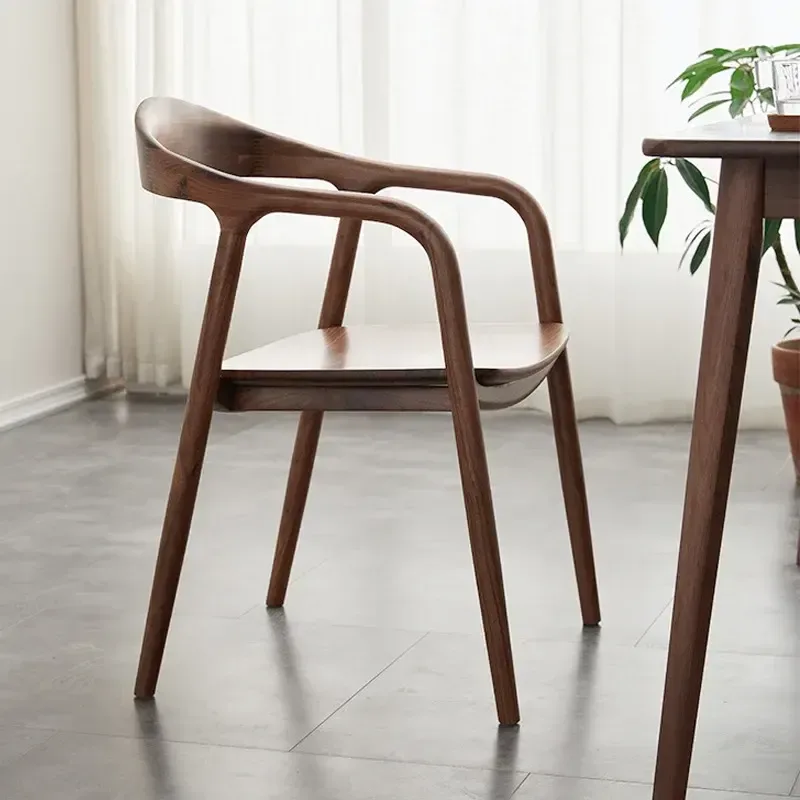 Wooden Chairs
Foshanchair Beech Solid Wood Dining Chairs
100% Solid Wood · MOQ 6 pcs · $45
View model →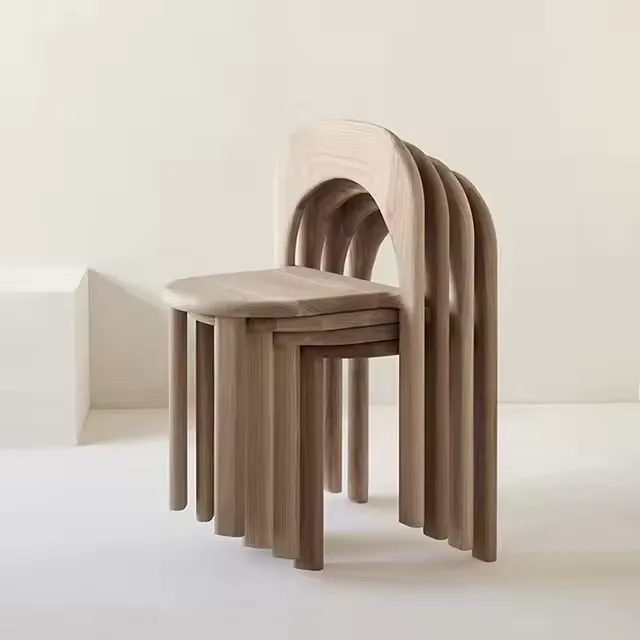 Wooden Chairs
Foshanchair Nordic Wooden Stackable Chairs Dining
100% Solid Wood · MOQ 4 pcs · $39
View model →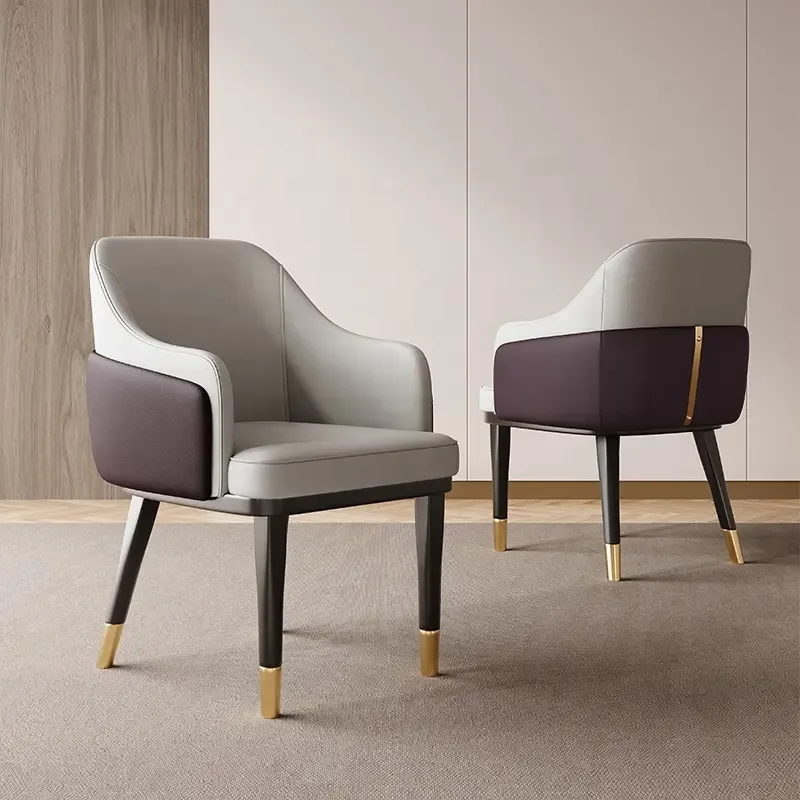 Wooden Chairs
Foshanchair Luxury Leather Dining Chairs High-Quality Velvet
Ash wood · MOQ 50 pcs · Get Quote
View model →