Chair Base Types: Four-Leg, Sled, Cantilever
Published by Foshanchair · Chair manufacturer in Foshan, China
Two chairs can share a shell, a fabric and a unit price and still behave nothing alike in service, because the base does the engineering. The base decides how the seated load reaches the floor, whether the chair rocks on a floor that is 3 mm out, how high it stacks and which joint cracks first. Buyers who specify it as carefully as the upholstery stop replacing chairs in the second year. This guide covers the three bases we build most and the numbers worth writing into the order; the chair catalogue shows each of them in production.
1. Where the load actually goes
Weight travels from the seat through the rails to the four corners, down the legs and into the floor. Lean backwards and the load becomes a couple: the front legs try to lift, the rear legs take the compression, and the corner joints absorb the difference. That corner is the highest-stressed joint on any chair, and it is where a base is either engineered or merely assembled. Reduce the contact points and the load per point rises: four legs share a 110 kg guest between four areas, a sled shares it along two runners, a cantilever pushes all of it through two bends. Our test standards guide explains how EN 16139 and BIFMA X5.1 load those points. Bar-height bases — trumpet, disc, gas lift — are covered in the bar stool sourcing guide.
2. Four legs: the default, and three ways it fails
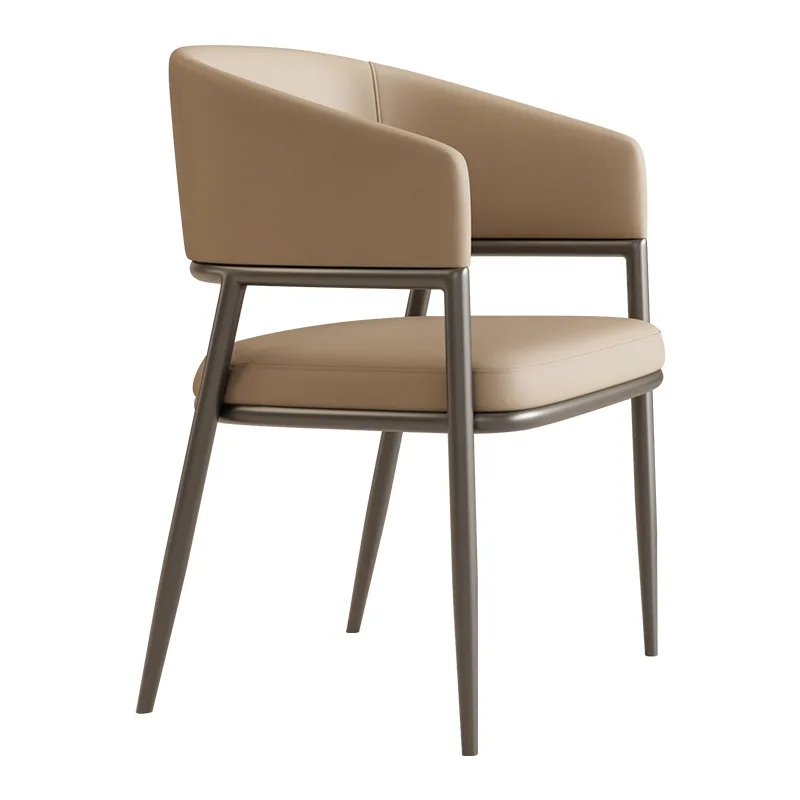
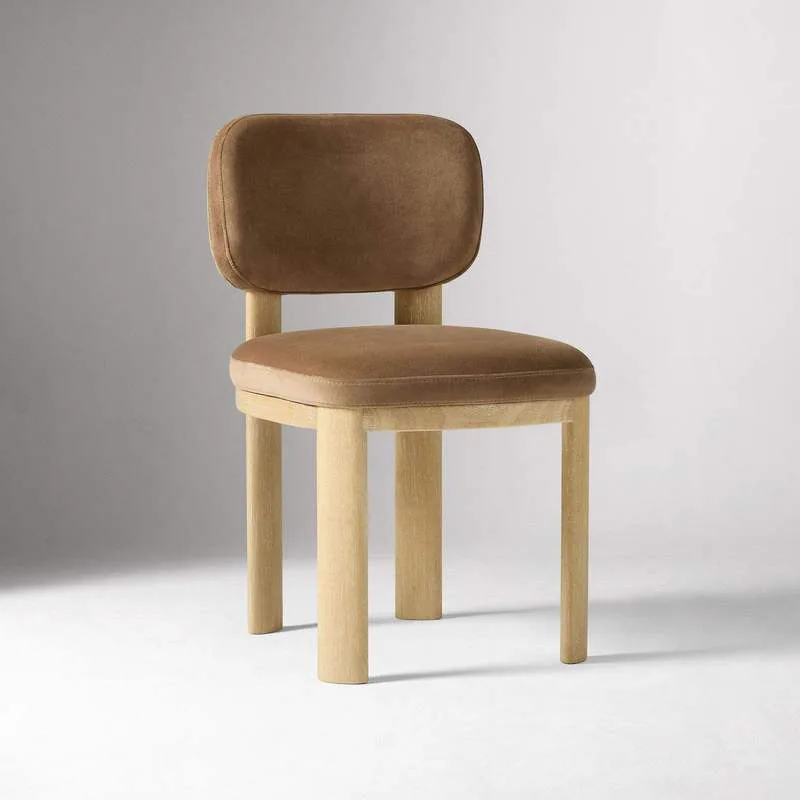
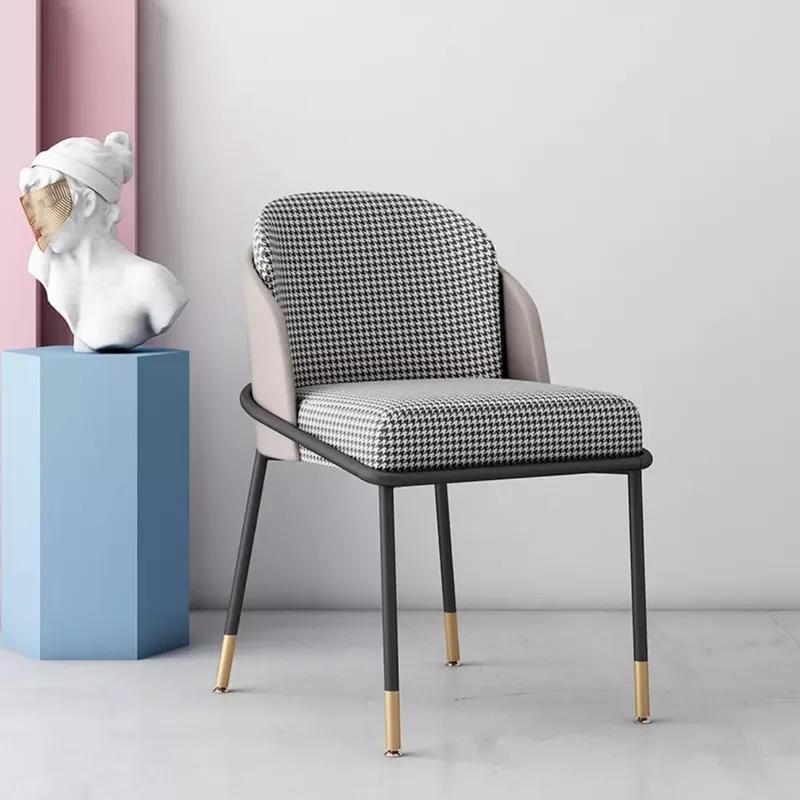
Four legs remain the default because they stack, pack flat and fit any room. Most of the failures buyers report come from three details. The first is splay: straight legs give a narrow footprint and a tidy aisle, splayed legs give stability when a guest leans back but eat floor area and reduce stacking density. The second is the corner joint — a mortise and tenon with a corner block on timber, a full-penetration weld on steel, and a weld that only looks neat on the outside is the one that opens. The third is rock. Four points on a floor with a dip means one leg hangs in the air, which guests read as a badly made chair, so specify threaded glides with 3 to 5 mm of adjustment or accept the rock. Our solid wood range and a metal-leg contract chair show both versions.
3. Sled bases: contact along a line
A sled base replaces four legs with two runners, usually with the ends turned up so they slide over thresholds instead of catching. The gain is contact: a runner touches the floor along its whole length, so the load spreads, a dip in the floor stops mattering, and the chair does not rock. That makes it the sensible choice for old buildings, terraces, mezzanine decks and anywhere the flooring is soft enough to dent under a point load. The cost is behaviour. A sled is dragged rather than lifted, so runner ends need nylon or felt glides and hard floors will show marks within a month. It does not stack, a bent runner is a factory repair, and the frame needs a wider footprint to feel as stable as a four-leg chair. Lounge and waiting areas are where runners earn their place; our leisure chair range is built on them.
4. Cantilever: a spring you have to design for
A cantilever chair has no rear legs: the frame runs back from the front legs, bends at floor level and returns under the seat, so the rear is held by a bend rather than a post. The movement is the point: the back gives as a guest leans, which is comfortable and reads as quality. It is also a fatigue problem. As a working rule, the centreline radius of the bend should be at least two to two and a half times the tube's outside dimension — for 25 mm tube, a 50 to 63 mm radius — because a tighter bend thins the outer wall exactly where the tension is highest. Tube in the 25 × 25 × 2.0 mm range is the usual starting point for contract use; anything thinner springs beautifully and cracks in a season. The failure to look for is a hairline on the outside of the bend, usually under intact paint, so inspect with raking light after any cyclic load test. Our iron chair range includes cantilever frames, and the bend is the first thing we show a buyer.
5. What stacking does to the base
Nesting is a property of the base, not of the seat. A chair stacks because its legs splay outwards and its seat is narrow enough to drop past the frame below; the stack pitch is set by leg angle and back height together. A four-leg frame with the right geometry nests four to eight high, and stacking chairs usually carry a trolley so a hundred can move in one trip. Sled and cantilever frames stack zero — the runners and the bend sit in the same plane, so the second chair lands on the first. If your venue converts between layouts, settle that before comparing prices, because the geometry cannot be changed after the tooling is cut. The stackability and storage guide goes through the arithmetic, and the stackable range lists the frames that pass it.
6. What to specify, and what to check on the sample
Write the base into the purchase order as a specification, not a photo. Name the type, the footprint at floor level, the tube section and wall thickness or the timber section, the bend radius on a cantilever, the glide material and its adjustment range, the load rating — 150 kg static is a fair contract floor — and the spare glides per ten chairs. Then check five things on the sample. Set it on a flat plate and push a 2 mm feeler under each leg in turn; more than a millimetre of rock is a reject. Sight along a runner or a seat rail for a twist that a tape measure will miss. Push the seat edge backwards while a colleague holds the base, and listen at the corner joint for a creak or movement. Measure the footprint against the drawing, since a narrow base is the quiet cause of tipping complaints. Finally, read the paint at the bend and at every weld with raking light, because filler and a thin coat show there first. Custom bases are quoted from a drawing through our OEM and ODM process.
Conclusion
Base choice decides stability, storage, floor marking and repair cost long before fabric does, and none of it is visible in a catalogue photo. Decide the floor type and the storage plan first, then pick the frame that suits them, then compare prices on like-for-like specifications. Send us your floor type, seat height and stacking requirement through the contact form and we will say which base survives the room before we quote it.
Related: Chair Joints: What Buyers Should Inspect · Stackable Restaurant Chairs: Storage and Transport
Models we build for this
Factory-direct pricing, custom finish and fabric, MOQ from a few pieces.