Sourcing Bar Stools: Bases, Lifts and MOQ
Published by Foshanchair · Contract seating team in Foshan, China
Bar stools are the item hospitality buyers most often get wrong, because everything that matters is hidden below the seat: the base footprint, the lift class, the weld on the footring. By the time a guest notices, the stool is already in the room. This guide covers the six decisions to settle before you ask any supplier for a price — the same sequence we walk through on our bar stool range.
1. Choose the base before the finish
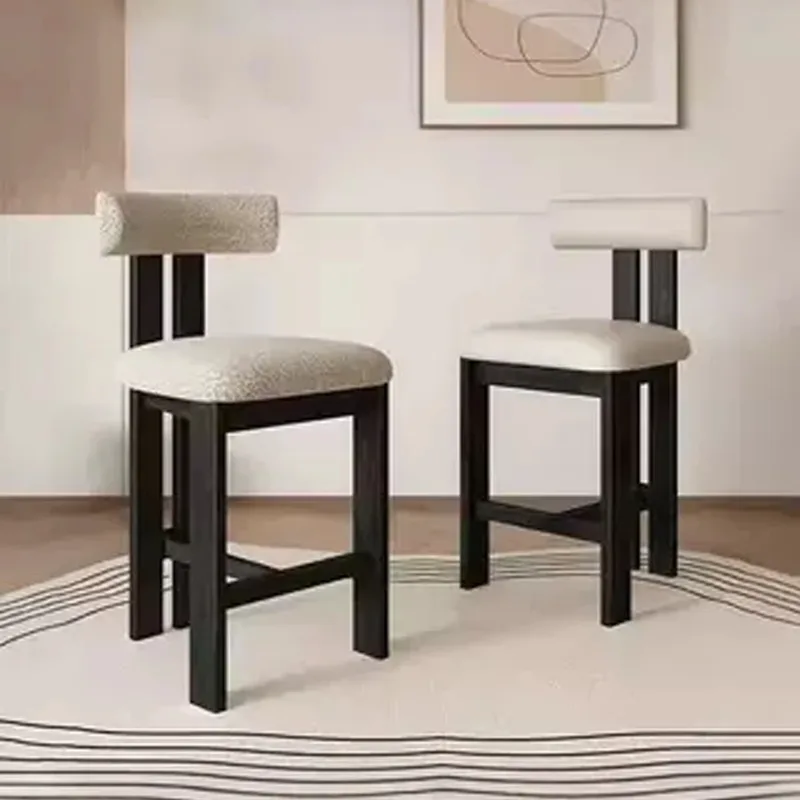
Four bases cover almost every commercial bar: a welded four-leg frame, a splayed trumpet base, a column on a disc base, and a sled. Four-leg frames are the most stable on imperfect floors, pack flat and carry an integrated footring, which makes them the default for pubs and beer gardens. Disc-base columns swivel and take up less floor, but the disc must be 40–45 cm across or the stool tips when someone leans; check the disc also clears the foot traffic behind the bar. Trumpet bases read more premium and spread load well, though the splay weld is the first place a cheap copy cracks. Whichever you pick, the footring must be welded to the legs — clamp-on rings rotate, loosen and rattle within a season. Compare four-leg wooden stools against column models side by side before you commit.
2. Gas lifts, swivels and honest weight ratings
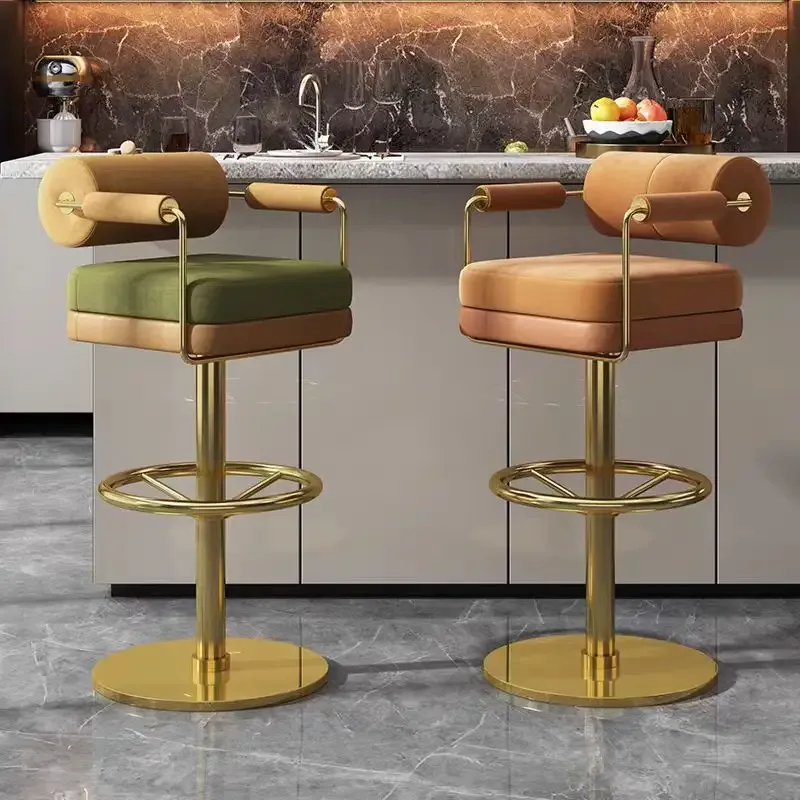
Height adjustment is where contract stools fail. A Class 3 lift is adequate for a quiet cafe counter; a bar where guests drop onto the seat needs Class 4, which uses a thicker tube wall and carries a longer cycle rating. Ask for the lift certificate with a stated cycle count rather than accepting the word “heavy duty”. On swivel models, a ball-bearing mechanism holds up far better than a plain nylon bushing and should turn 360 degrees without grinding or a lateral wobble at the column; a memory-return swivel, which eases back to front, is worth specifying at a bar where guests twist sideways to talk. Ratings matter too: domestic stools are often sold as 100–110 kg, but a commercial bar should specify a static load test at 150 kg to the L2 severity of EN 16139. See the adjustable swivel model for the component layout we mean, and browse the full catalogue for fixed-height alternatives.
3. Seat geometry changes with height
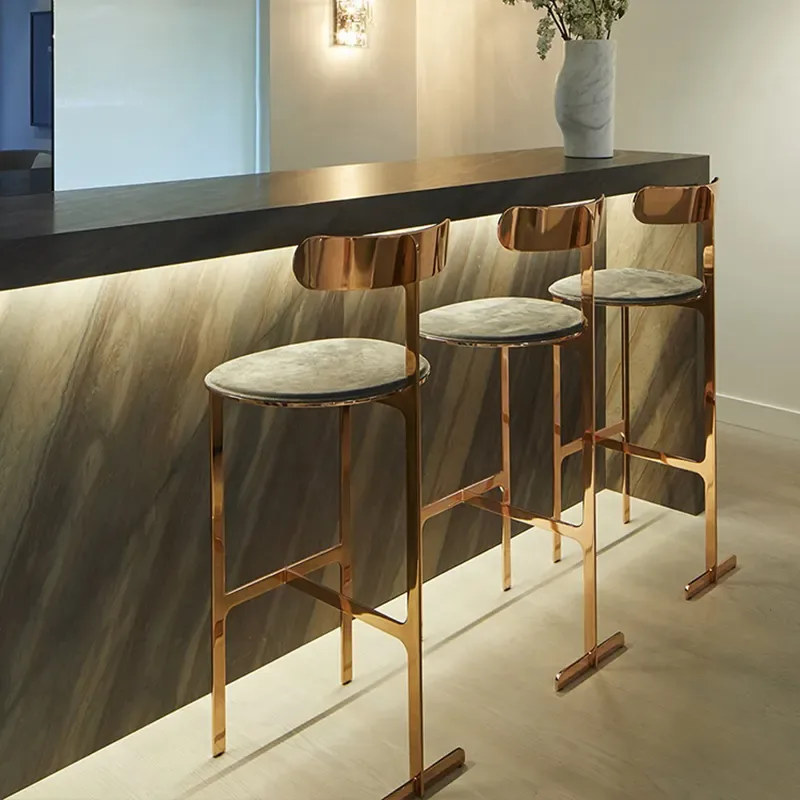
Seat height is arithmetic, not taste: a 90 cm counter wants a 61–66 cm stool, a 105–110 cm bar wants 71–76 cm, and either way you keep 25–30 cm of clearance to the underside of the top. The detail buyers miss is what happens above the seat. At bar height, a 38–42 cm seat depth stops guests perching on the front edge, and a back of 25–35 cm supports the lumbar without walling off the room — low backs generally suit a bar better than high ones. Set the footrest 15–20 cm above the floor so shorter guests can actually reach it; a footring that only works for tall people pushes everyone’s weight onto the thighs. Our bar stool height guide has the measurement method, and the metal-framed leather bar chair shows a back height that works at 75 cm.
4. Materials that survive a wet, spill-prone room
Bar areas combine spilled liquid, chlorine-based cleaners and shoes on the footrest, which rules out delicate finishes. On metal frames, ask for powder coating at 60–100 microns dry film thickness over a phosphated substrate, and go to 304 stainless on the bar front where salt and sanitizer concentrate. On wood, a sealed conversion varnish or 2K polyurethane resists ring marks better than an open oil finish, which needs re-oiling every 12–24 months. Upholstery is the other half: PU or vinyl wipes clean and suits a cocktail bar, while fabric needs at least 40,000 Martindale cycles plus a flammability certificate for the market you sell into. Foam should be 30–35 kg/m³ with a denser 40 kg/m³ pad at the front edge. Custom finishes are quoted through our OEM and ODM service.
5. MOQ, price bands and how stools pack
Price bands are fairly predictable. Basic welded metal or solid wood four-leg stools run roughly $18–45; upholstered metal stools with a swivel column land at $40–90; solid wood with leather or a designer silhouette sits at $90–200 and up. MOQ follows the model: stock lines quote from 2–10 pieces, made-to-order finishes from 50. Because a stool is bulky relative to its value, freight often outweighs the unit price difference — an assembled stool occupies 0.12–0.25 CBM, a knock-down version 0.06–0.10, and a 40HQ holds roughly 350–450 assembled units. Mixing two or three models in one container is the standard way to hit MOQ without overstocking. Our export packaging guide explains how carton grade and corner protection change the claim rate.
6. Sample, inspection and PO clauses
Order one sample of each base type you are considering and sit on it at the actual counter height, on the actual floor. Then write the specification into the purchase order rather than the email thread: seat height ±10 mm, disc diameter, lift class and cycle count, static load rating with the test standard named, finish as RAL code plus gloss level plus film thickness, spare glides at 5% of quantity, and the carton specification. At inspection, wobble every stool on a flat plate, pull the footring weld, cycle the swivel, and check the lift certificate against the delivered batch. AQL 2.5 at general inspection level II is a reasonable default, and for a made-to-order finish add two weeks to the quoted lead time for the first batch. We describe the approval sequence in our sample approval checklist, and you can read how our own Foshan workshop handles small runs.
Conclusion
Base first, then lift and rating, then geometry, then materials, then commercial terms — in that order, a bar stool order stops being a gamble. Foshanchair builds bar stools from a few pieces per model with custom finish, fabric and height, and quotes FOB or DDP depending on destination. Send us your counter height, seat count and the look you are aiming for, and we will put a specification and a price together.
Related: Bar Stool Care: Footrests, Wear and Repair · Bar Stool Height Guide: Counter vs Bar
Models we build for this
Factory-direct pricing, custom finish and fabric, MOQ from a few pieces.