Leisure Chair Buying Guide for Hotels and Lounges
Published by JP · Dining chair studio in Foshan, China
A lounge chair is the one piece of hotel seating a guest will sit in for forty minutes straight — waiting for a taxi, holding a meeting, reading by a window. That is a different brief from a dining chair, which is why two projects with the same budget so often end with one model that still feels firm after three years and another that sags. Here is what to specify, using the checks we run on our own Foshan production floor.
1. Start by separating leisure from dining seating
Suppliers list anything soft as a “leisure chair”, so decide first what the project needs. A leisure chair sits lower (roughly 40–43 cm at the seat, against 45–46 cm for dining), is deeper, reclines further and carries thick upholstery over a wider footprint. That shape makes a three-hour lobby sit comfortable — and makes the chair unusable at a dining table, where the guest ends up below the tabletop.
So split the seating schedule by dwell time. If guests sit for under an hour and the venue turns tables, a dining chair is the cheaper and correct answer. If the room is a lobby, waiting area, hotel bedroom or executive floor, you are specifying lounge seating and should budget accordingly. Our leisure and lounge chair range spans compact bedroom armchairs to full chaise longues, and reading it alongside the full chair catalogue makes the split obvious.
2. Foam density is the specification guests can feel
Almost every lounge chair that fails early fails in the cushion, and the cause is nearly always foam density rather than thickness. A 100 mm cushion in 20–25 kg/m³ foam looks generous in the showroom and flattens into a bowl within a year of hotel use. For contract seating, specify 30–35 kg/m³ high-resilience (HR) foam in a 40–50 mm seat cushion, with a slightly softer 25–30 kg/m³ in the backrest. Density and hardness are separate properties: a soft-feeling chair can still be dense.
Two further points belong in the spec. Ask which suspension sits under the foam: plywood shells are cheapest, elastic webbing is a step up, and sinuous (zig-zag) springs give long-term resilience — it is invisible in a photo. And note that a fibre wrap adds plushness but needs re-fluffing, so a busy lobby is better with a plain HR block and a stitched seam. This solid wood lounge chair with a soft seat is built on that combination.
3. Upholstery: choose by rub count and fire standard, not by swatch
Fabric selection starts twice: once in the design meeting and once in the compliance meeting. On durability, look at the Martindale rub count. Around 25,000 cycles suits quiet hotel bedrooms, 30,000–40,000 cycles is the working range for lobbies, and over 50,000 belongs in the busiest public areas. Microfibre and PU leather wipe clean wherever food and drink are served, while velvet reads premium but shows crushing — the trade-off we set out in Upholstered vs Solid Wood Dining Chairs.
Then fire performance. UK projects normally need a foam and cover combination that passes Crib 5 (BS 5852); North America asks about California TB 117-2013 and, for high-occupancy seating, TB 133; European projects reference EN 1021-1 and -2. A designer fabric may therefore be unusable because it was never tested with an FR interliner — so raise it at sampling, not at delivery. Colour matching to a house palette is part of our OEM and ODM service, and the approved sample becomes the reference for the batch.
4. Frame, base and the fittings that loosen
A lounge chair frame has to survive being dragged across a stone floor and sat on at an angle. Kiln-dried hardwood (ash, oak or beech) with mortise-and-tenon or dowelled joints and glued corner blocks is the standard to ask for; a hardwood plywood shell is fine in the body, but MDF arm and leg joints are not, because they strip their fixings. Powder-coated steel suits indoor metal bases, while stainless steel is what coastal sites, spas and poolside areas need — see our stainless steel chair guide.
Two details decide whether the chair is still tight in five years: whether the base-to-body fixing can be re-tightened from underneath, turning a wobbly chair into a five-minute maintenance job, and whether adjustable glides stop the rocking that opens joints on uneven floors. For a load figure, contract seating is normally tested to EN 16139 for non-domestic use, with level 2 covering severe use; domestic EN 12520 is the weaker test. A heavier timber build such as this solid wood single-person sofa chair is where a stated load rating is worth demanding.
5. Dimensions and the layout maths
Comfort in a lounge comes from proportions, and the numbers are predictable. A seat height of 40–43 cm suits most adults in a relaxed sit, depth of 50–55 cm fits an average frame, and arm height of 60–65 cm lets someone rest an elbow without hunching. A compact lounge armchair is typically 70–85 cm wide, which is the figure your layout plan needs.
For circulation, leave at least 45 cm between the arms of adjacent chairs and 90–100 cm in a primary walkway, and allow roughly 0.9–1.2 m² per lounge seat once the access zone and a side table are counted. A chaise longue needs 160–180 cm of length. Where the same room also holds dining seating, our guide to matching chair style to your interior keeps the two families visually consistent, and this accent chaise lounge on a solid wood frame is what most projects use where the footprint allows a longer piece.
6. MOQ, price bands and lead time
Lounge chairs are bulkier and sell in smaller quantities than dining chairs, so the commercial structure differs. MOQ in Foshan is set per model: commonly 20–50 pieces for a design already in production, and 50–100 pieces once you change dimensions, frame finish or fabric. Prototyping a new shape costs more, but a factory that wants the order will normally credit it against production. Fabric, colour and a logo on the seat deck are routine; a new frame tool is not.
On price, expect roughly USD 60–120 FOB for a compact lounge chair with a metal base and PU upholstery, USD 150–400 for a kiln-dried hardwood frame with HR block foam and a performance fabric, and USD 500–900 for a designer chaise in solid timber and leather. Production runs 25–35 days after sample approval, plus 10–15 days for customer’s-own-material fabric. Because these chairs are bulky, freight follows cubic volume rather than weight, so ask for packed CBM per carton before comparing quotes. The paperwork side is covered in our guide to importing chairs from China.
Conclusion
Leisure chairs are bought on five specifications: foam density, suspension type, rub count, fire performance and frame construction. Get those into the purchase order with a stated load standard and a re-tightenable base fixing, and the chair will still feel like the showroom sample after years of daily use. JP builds upholstered lounge seating for hotel groups and hospitality projects from our Foshan factory — send us your seating schedule and we will quote per model.
Related: Upholstered vs Solid Wood Dining Chairs · Stainless Steel Chair Guide: 304 vs 201 Grade
Models we build for this
Factory-direct pricing, HR block foam, custom fabric and FR interliner, MOQ from a few pieces.
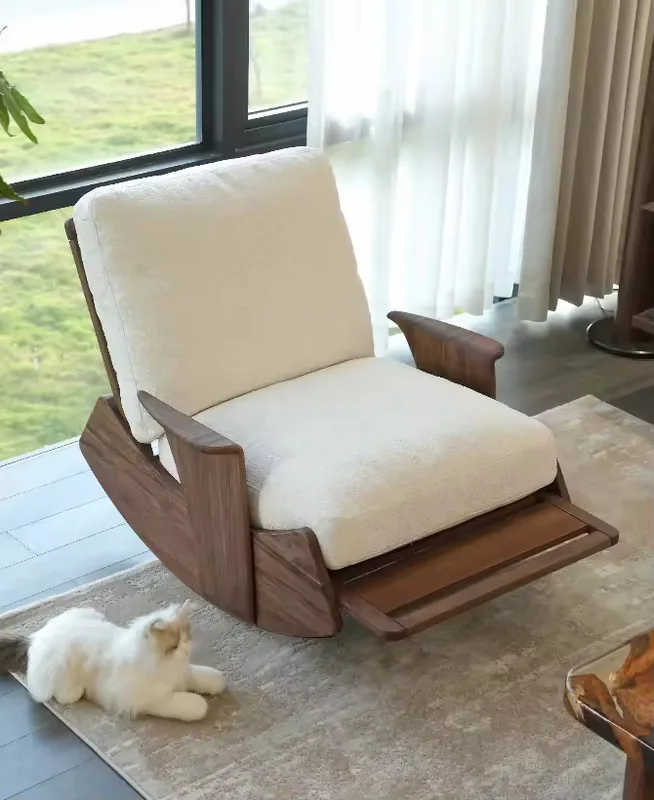 Leisure & Lounge Chairs
JP Modern Style Solid Wood Leisure Chair
Solid wood · MOQ 4 pcs · $318
View model →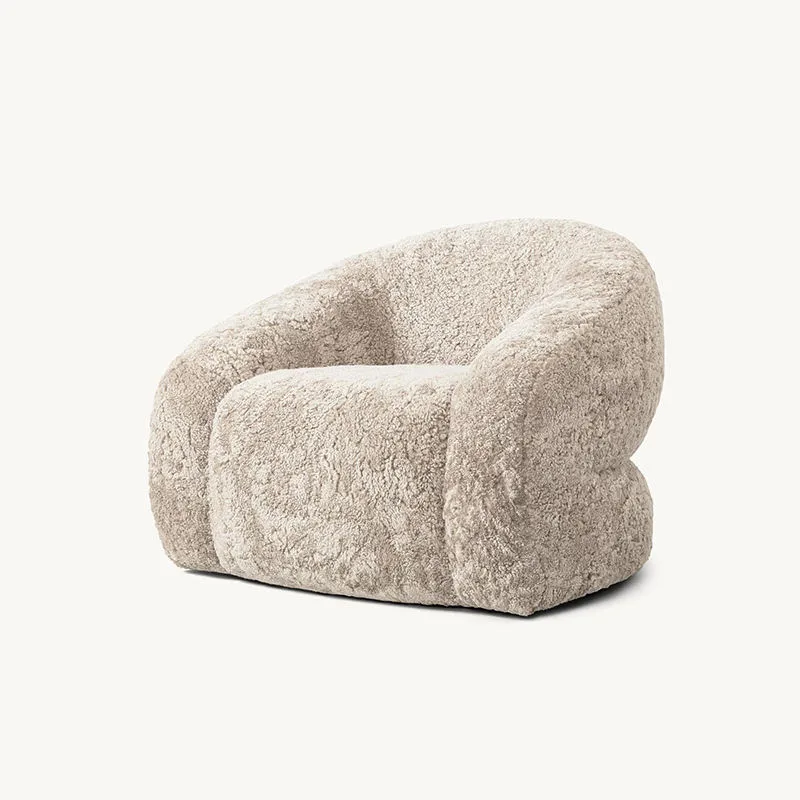 Leisure & Lounge Chairs
JP Luxury Modern Accent Chaise Lounge
Solid wood frame · MOQ 2 pcs · $420
View model →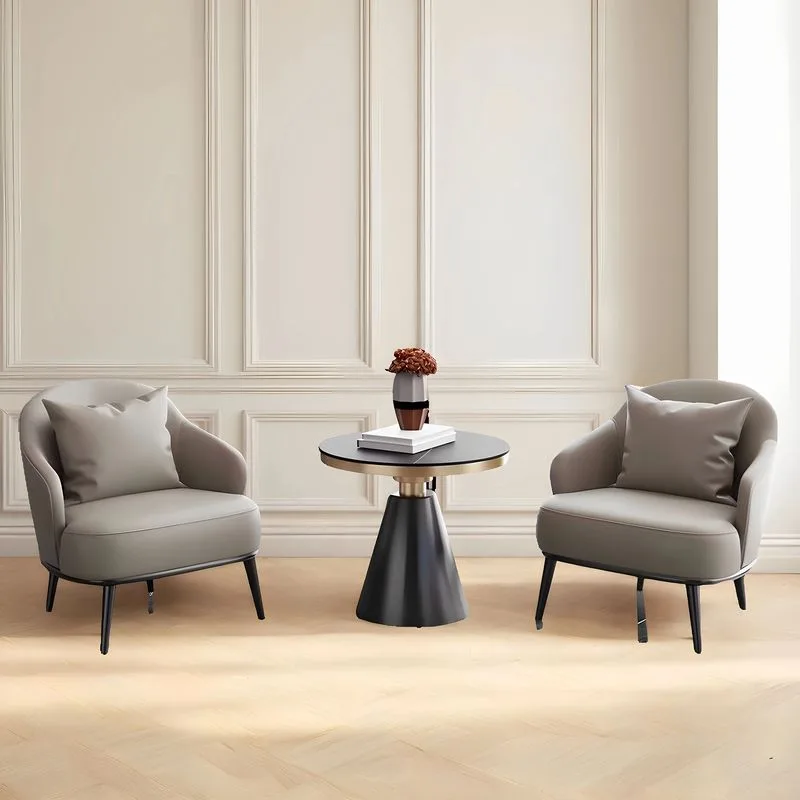 Leisure & Lounge Chairs
JP PU Leather Leisure Lounge Chair Set
PU leather · MOQ 6 pcs · $70
View model →