How to Choose Iron Restaurant Chairs for Commercial Venues
Published by JP · Dining chair studio in Foshan, China
A powder-coated iron frame is the cheapest way to put a durable seat in front of a guest — and the fastest way to buy a chair that rattles, rusts or collapses in year two. The difference almost never shows in the catalogue photo. It sits in the tube wall thickness, the quality of the welds and the coating process behind the colour. This guide covers the six specifications worth writing into a purchase order before you approve a sample.
1. Where iron chairs earn their keep
Iron and steel frames win in high-turnover, high-abuse settings: quick-service and fast-casual dining rooms, canteens, food courts, pubs, café terraces and overflow banquet seating. They are cheap per seat, easy to wipe down, and can be powder coated to any RAL colour so a chain can match its brand across every store. They lose to solid wood and upholstered frames in fine dining, where warmth and weight signal quality — which is why most operators use both in the same building. Our factory and process page explains the workflow from sample to container.
2. Frame spec: tube gauge, wall thickness and welding
Ask for the tube dimension and the wall thickness in millimetres — not for “thick” or “reinforced” tube. A commercial-grade iron dining chair typically uses 25 mm square or round tube with a 1.2–1.5 mm wall. Budget models drop to 0.8–1.0 mm: it looks identical on a showroom floor and starts to flex after a few thousand sits. Then look at the joints. Seat-frame corners and leg-to-seat connections should be fully welded around the perimeter and ground smooth, not tack welded at two points with visible pinholes. Cold welds are the most common failure point, and they are easy to screen for: request a close-up photo of the seat frame underside, or buy one chair and inspect the weld penetration.
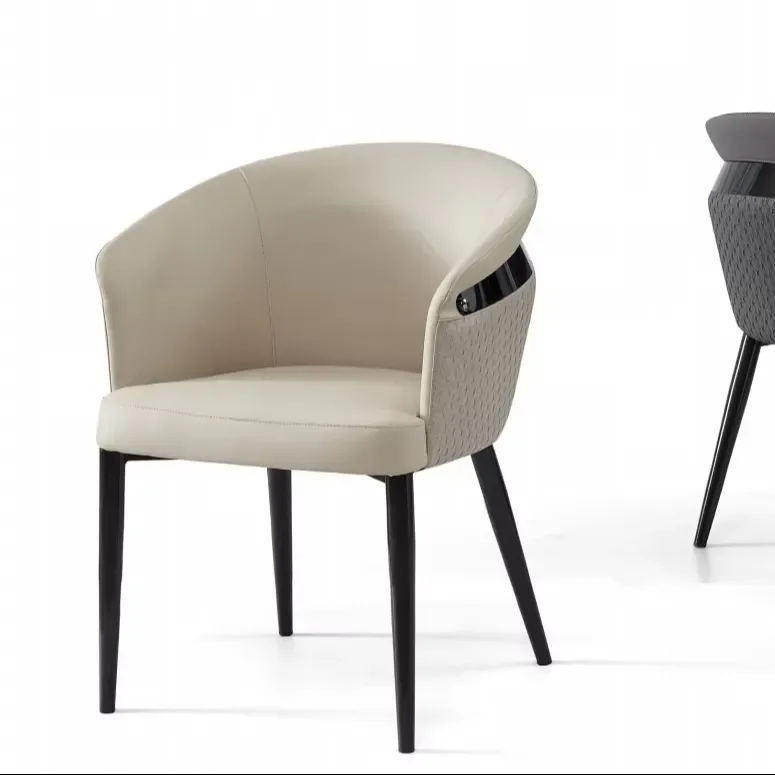
Load ratings matter more than weight. Contract seating is normally tested against EN 16139 for non-domestic seating, with level 2 covering severe use such as pubs and canteens; a 150 kg static load on both seat and backrest is a reasonable floor for that claim. Also check the feet: levelling glides on uneven floors prevent the rocking that loosens joints, and nylon glides protect tile and timber. A well-specified example is this iron-legged dining chair with leather upholstery, which pairs a heavier welded frame with a padded seat for public areas.
3. Powder coating is where the lifespan is decided
Coating is a three-step process, and suppliers who skip a step produce frames that flake at the edges within a year. The frame must be alkaline degreased, phosphated (iron or zinc), rinsed and fully dried before powder is applied — then cured at the resin’s specified temperature for the specified time. When you audit a sample, look inside a tube end: if the interior is bare metal, the pre-treatment line is probably manual and inconsistent. Then verify thickness with a dry film thickness (DFT) gauge: 60–80 microns is the right target indoors, and 100–120 microns of polyester TGIC powder is what you need for terraces and poolside. Epoxy powders are tougher chemically but chalk in UV light, so avoid them outdoors. Ask for a salt spray report to ASTM B117 — roughly 500 hours for indoor models and 1,000 hours for weather-resistant claims — and a physical colour sample against your RAL code, because batch-to-batch shade drift is real. Custom powder colours and branded finishes are part of our OEM and ODM service, and the colour must be approved before mass production starts.
4. Seats, upholstery and real-world comfort
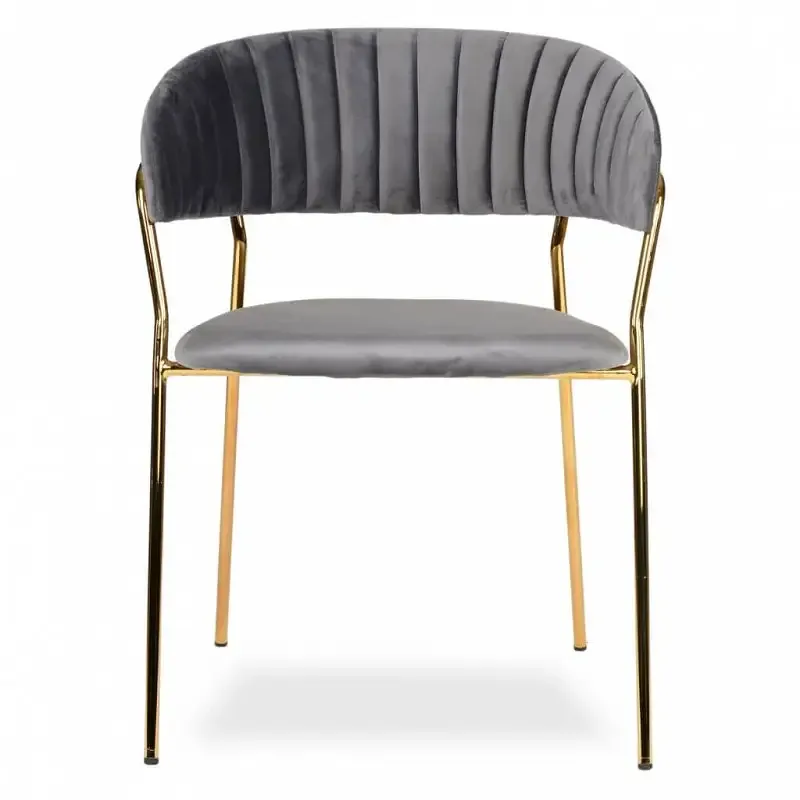
Most iron chairs use one of three seat constructions: a plywood pan with foam and cover, a welded steel pan, or a moulded polypropylene shell. For high-turnover venues, PU or PVC over 40 mm of 30–35 kg/m³ foam cleans fastest and resists spills; woven fabrics look better but need a stain treatment and accept a shorter service life. If you sell into the UK or North America, confirm fire performance before quoting — Crib 5 and CA TB 117 requirements decide which foam and fabric combinations are even available, and retrofitting them later is expensive. Seat height should land near 45–46 cm for dining tables and about 65 cm or 75 cm for counter and bar heights. For premium interiors, a frame like this gold iron-leg dining chair with PU leather shows how far a metal frame can be pushed.
5. Stacking, storage and container loading
Stacking is the quiet cost saver. Iron chairs with a proper stacking hook nest four to eight high, which cuts storage footprint by 60–70% and speeds up floor resets. Before you confirm an order, ask for a container loading plan for your SKU mix: a 40HQ holds roughly 1,000–1,400 nesting metal dining chairs depending on back shape and whether they stack four or six high, so the difference between two stack heights can move your freight cost per chair by 20–30%. Mixed-model loading also lets you hit MOQ on several designs at once, a point we cover in more detail in our stackable restaurant chair storage guide, and a light open-back model such as this wrought iron dining chair is one of the easiest frames to load tightly.
6. Samples, MOQ, price and lead times
Always start with a physical sample, not a render. Stock models are often shipped free or at cost, while custom colour or fabric samples usually run USD 50–150 and are credited against the order. MOQ in Foshan sits at 50–300 pieces per model, but mixing three or four models in one container is the standard way importers reach it. Expect FOB pricing of roughly USD 16–45 for a powder-coated frame with a PU or PVC seat, and USD 45–90 once you move to premium fabrics, leather or a heavier welded frame — our full chair catalogue shows where each model sits. Production runs 20–30 days after sample approval, plus 7–10 days for a custom powder colour, and 3–5 days for inspection and packing. Before the balance payment, verify four things: tube wall with calipers, coating thickness with a DFT gauge, a stack of six on a level floor, and a 150 kg static load test on three random pieces. Payment is normally 30% deposit with the balance against the B/L copy, or an LC at sight for larger programmes — state it in the proforma invoice, not in a chat message. Send your quantities and target port to request a quote and we will return a spec sheet with tube, coating and packing details.
Conclusion
Iron chairs are a specification game, not a design game. Fix the tube wall, the weld quality, the coating thickness and the stack height in writing, and a metal frame will outlast several rounds of soft seating at a fraction of the cost. JP builds powder-coated iron seating for importers, restaurant groups and hospitality projects from our Foshan factory — send us your seating schedule and we will quote per model with the exact specification attached.
Related: Stackable Restaurant Chairs: Storage & Transport Guide · Importing Dining Chairs from China
Models we build for this
Factory-direct pricing, custom powder colour and upholstery, MOQ from a few pieces.