Tatami Chair Buying Guide for Hotels and Cafes
Published by Foshanchair · Low seating & tatami chair studio in Foshan, China
Low seating is no longer a niche. Hotel guest rooms, tea houses, spa lounges, Japanese restaurants and boutique showrooms all use tatami-style seats to create zones a standard 45 cm dining chair cannot reach. The problem for a B2B buyer is that the phrase covers everything from a $10 floor cushion to a $34 solid wood couch chair, and the cheap end fails inside a season under commercial traffic. This guide covers the specs that actually decide wear: frame construction, foam density, cover removal and table pairing. Start with the tatami chair range to see the shapes currently in production.
1. Where low seating earns its floor space
Tatami and legless chairs work best as accent seating, not as a replacement for dining chairs. In a hotel they fill a window bay or a tea corner; in a Japanese or Korean restaurant they define a raised platform zone; in a spa or showroom they slow guests down without needing table service. Treat them as secondary seating and cap them at around 20–30% of total seat count. Two practical limits apply: guests with mobility restrictions will avoid floor-level seats, and anything sitting at floor height collects dust and crumbs that a vacuum cannot reach. Both are manageable if you plan for them, and neither is a reason to skip the category.
2. Three frame types and how each one fails
A legless cushion has no frame at all, so the only wear items are foam and cover — it is the cheapest to buy and the easiest to ship, and our single legless backrest floor chair is built exactly that way. A low-leg wooden frame at 12–25 cm fails at the joints, because guests push off sideways rather than sitting straight down; dowels and tenons must be glued, not stapled. A full solid wood couch chair at 30–35 cm such as the solid wood legless couch chair reads like real furniture and puts the stress on the backrest joint instead. In every case ask for kiln-dried hardwood at 8–12% moisture content and a moisture meter reading on the sample. A quick field test on the sample: sit down and push yourself up and sideways off the seat a dozen times. Any creak or movement at that stage becomes a warranty claim after six months of service.
3. Foam density is the spec you cannot see
Foam does not photograph. A floor chair made with 18–25 kg/m³ foam looks identical to one made with 35 kg/m³ on a catalogue page, and the first one flattens into a mat within months. Specify 30–35 kg/m³ as the commercial minimum and 40 kg/m³ or above where guests sit for an hour or more. Ask separately about the support layer and the comfort layer, and about total cushion thickness — 45–60 mm is the working range for a floor seat. Check how the layers are bonded: heat-sealed foam survives humid climates, glued foam separates. A useful cross-check is unit weight — two chairs of the same size at noticeably different weights rarely have the same foam inside. Foam density and compression set belong in the PO, not just the email thread.
4. Removable covers decide your cleaning cost
In hospitality a zip-off, washable cover is non-negotiable. Without it, every spill takes a unit out of service or leaves a stain on the floor. Specify Martindale abrasion of 25,000 cycles as the contract minimum and 40,000 or more for heavy traffic, and ask for a pilling result as well. If the project is in the UK, request BS 5852 Crib 5; for California, TB 117; EN 1021-1 and -2 cover most of Europe. Mid-tone and darker covers hide staining far better than pale linen, and a wipe-clean PU face is worth the trade-off in food service even though it feels warmer. Order two spare covers per twenty units from the same dye lot — our wood legless tatami floor chair is supplied with a removable cover for exactly this reason, and the fabric and finish options guide covers how to specify it.
5. Pairing with low tables: heights and footprint
Get the height relationship right before anything else. A 15–20 cm legless chair pairs with a 30–35 cm Japanese-style low table; a 30–35 cm couch chair pairs with a 40 cm top. A 10–15 cm gap between seat height and table height is the comfortable zone — more than that and guests end up reaching down to eat. Allow more depth per seat than a dining chair: because guests sit with legs folded or swung to one side, budget 600–700 mm of width and 400–500 mm behind the table edge for legs and clearance. Watch the table base too: a trestle or central pedestal leaves folded knees free, while four corner legs on a low table fight the guest who sits diagonally. If you are specifying both pieces together, the commercial dining table guide covers top materials and base options, and our full catalogue lists matching low tables.
6. MOQ, packing and what to inspect
This is a low-cost category to test. MOQ is typically 10–12 pcs per SKU at roughly $10–34 per piece, and mixing models in one container is usually accepted. Where buyers get caught is packing: legless chairs compress and vacuum-pack, so carton counts are misleading — quote and compare CBM per unit (0.05–0.12 is normal), not per carton. On inspection, verify foam density against a cut sample, cycle the zip a few dozen times, take a moisture reading on any wooden frame, and include a carton drop test on the packaged unit with an AQL sampling plan. Put four things in the PO: seat height with a ±10 mm tolerance, the exact cover fabric and dye lot, the spare-cover quantity, and a warranty clause on foam compression. If you need a custom shape or cover, the OEM and ODM team handles development, and our factory profile explains how production is laid out.
Conclusion
Tatami and legless chairs are accent seating, so buy them in that order of priority: foam first, cover second, frame third. Specify density in writing, insist on a removable washable cover, and test the concept with a 10–12 piece order before scaling a platform zone across a whole property. Request a quote with your seat count, seat height and venue type and we will recommend the right models and packing plan.
Related: Leisure Chair Buying Guide for Hotels · Upholstered vs Solid Wood Dining Chairs
Models we build for this
Factory-direct pricing, custom finish and fabric, MOQ from ten pieces.
 Tatami Chairs
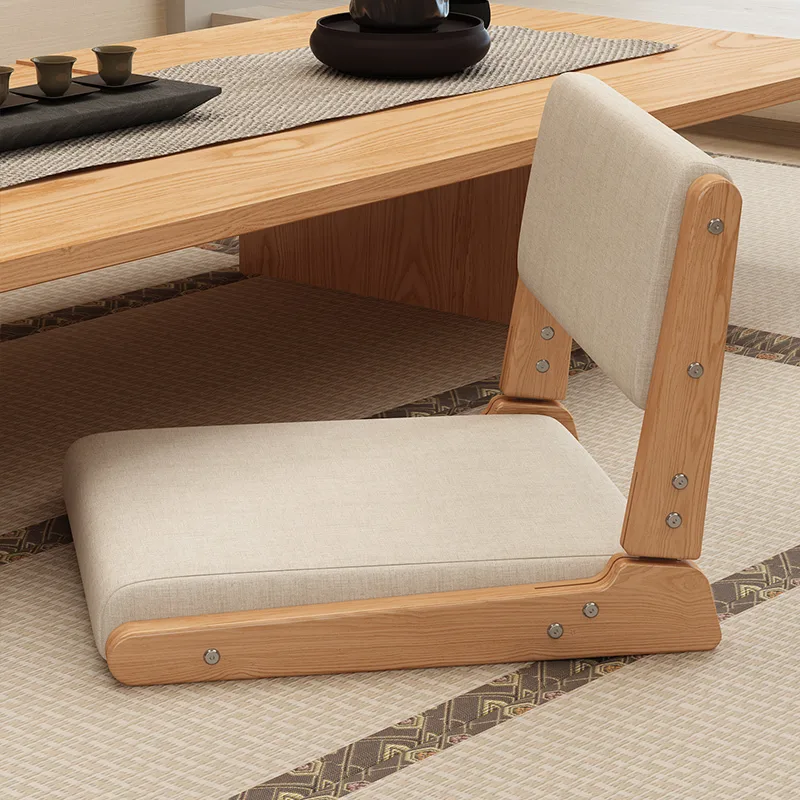
Foshanchair Japanese Style Backrest Legless Foldable Tatami Chair
Foldable frame · MOQ 10 pcs · $28
View model →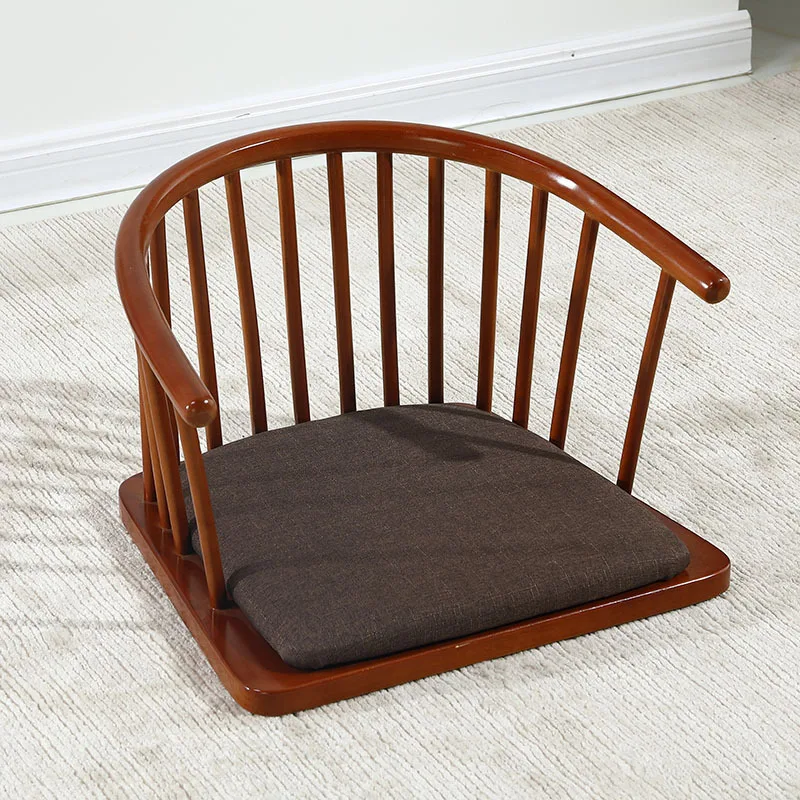 Tatami Chairs
Foshanchair Japanese Tatami Couch Chair Solid Wood Legless
Solid wood · MOQ 12 pcs · $34
View model →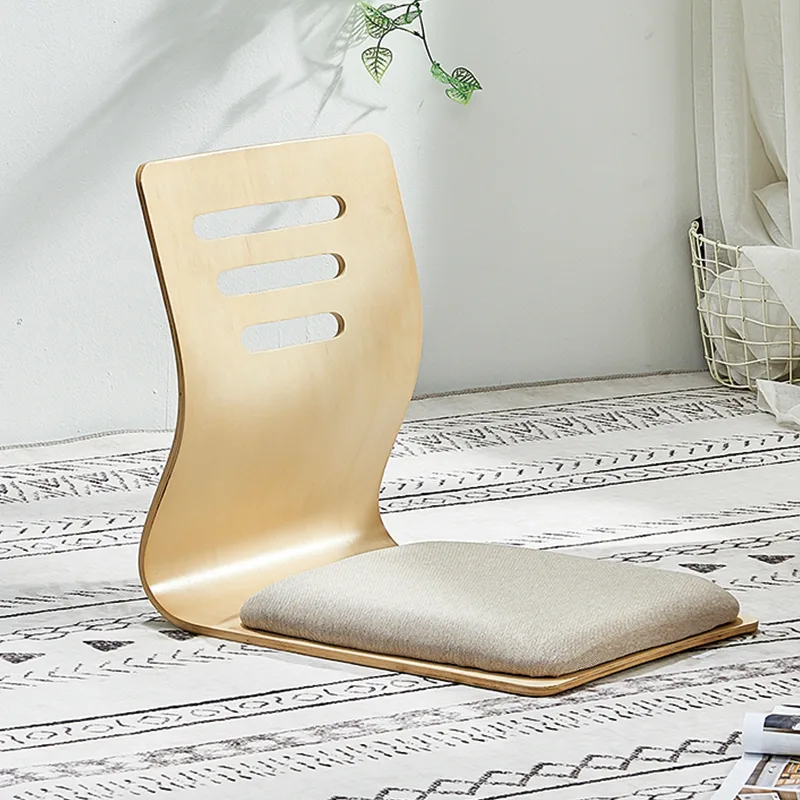 Tatami Chairs
Foshanchair Modern Japanese Dining Floor Chair Sofa with Wood Legs
Wood legs · MOQ 10 pcs · $12
View model →