Steam-Bent Wood Chair Parts: A Buyer’s Guide
Published by Foshanchair · Chair manufacturer in Foshan, China
Half the chairs sold as solid wood have at least one bent part: a hooped back, an arch rail, a back leg that sweeps into the seat. The catalogue calls it bentwood and stops there. Behind the word sit three processes with different costs and different failure modes, which is why two quotes for a visually identical chair can differ by a third. This guide covers how a part is bent, where the process goes wrong, and what to measure on the sample. Our solid wood chair range uses all three methods.
1. Three processes hide behind the word “bentwood”
Solid steam bending softens one piece of timber in a steam chamber, pulls it over a form and dries it clamped. The grain runs continuously around the curve, which is why a good solid bend takes knocks a glued part will not. Laminated bending stacks six to twelve veneers with glue and presses them into shape, reaching radii a solid section cannot. Moulded plywood shells go further, pressing cross-layered veneer into a three-dimensional seat or back. Cost runs solid highest, moulded next, lamination lowest. None is better in the abstract, but a quote that does not name the process is not comparable. Compare our bentwood stackable chair with a moulded shell and the difference shows up in the thickness at the curve.
2. The species, and the board you start with
Beech is the default: even fibre, low extractives, predictable springback. Ash behaves similarly and takes stain well. Oak can be bent but needs longer steaming and a gentler radius, and its ring-porous structure makes tearing more likely. Walnut and teak are chosen for looks, not bending behaviour, and both add cost. Rubberwood and softwoods are the wrong answer for a structural bend — they crack or creep. Stock selection matters more than the species name: straight grain with runout under roughly 1:15 along the part, no knots, pith or reaction wood inside the bend zone, because a defect that is cosmetic in a straight rail becomes a split once the section bends. This is the part of the specification buyers never see and the first thing traded away when a price is squeezed. Our beech solid wood dining chairs show graded beech before and after the bend.
3. The bending cycle: steam, strap, jig, dry in form
Steam at around 100°C saturated, roughly 45 to 60 minutes per 25 mm of thickness, longer for dense species. Under-steam and the outside fibres tear; over-steam and hydrolysis costs strength, so the part looks right and fails early. The plastic window after the chamber is minutes, not hours: once the surface drops towards 60°C the section stiffens and forcing it only cracks it. A steel strap clamped to the outside of the curve takes the tension, shifts the neutral axis outward and converts most strain into compression inside. The part then goes into a jig with 5 to 10 percent overbend for springback and stays there until it dries below 12 percent moisture. Skip that stage and the curve relaxes a few millimetres a year — on a chair, a back angle drifting out of spec. Our arch bentwood back range is dried in the jig, not on a rack.
4. Radius, thickness and where a bend fails
Wood fails at very little tension strain — a couple of percent — while it compresses far more before crushing, and that asymmetry sets every limit. Without a strap, a solid steamed section needs a radius of roughly eight to ten times its thickness; with a strap, five to six. Laminations reach three or four. Go tighter and either the outside face lifts a hairline tear along the grain or the inside face wrinkles and splits; both show in raking light along the curve, not straight on. Two other failures matter. End splits start at the horns where the jig grips, so blanks must be long enough to clamp. Thickness variation creates uneven strain, so one edge fails while the rest looks perfect — measure at the apex, not on the straight run. Woven backs hide the curve but change nothing mechanically; our rope-woven bentwood hotel chair still has to be inspected at the frame.
5. Laminated parts: layer count, glue class and the boil test
On a laminated bend the glue line decides lifespan. Ask three questions. How many plies, at what veneer thickness — a 12-ply stack of 1.5 mm veneers behaves very differently from a 6-ply stack of 3 mm. Which adhesive — melamine-urea-formaldehyde or phenolic for humid and contract use, interior grade only where the chair never meets a wet floor. And what proves the bond. If the part is sold for hospitality, ask for a glue-line test to EN 314 bonding class 3 or an equivalent boil-and-dry cycle on a cut sample; a factory running it routinely has an offcut to show in five minutes. Two cosmetic defects belong on the list too: sanding through the face veneer at the apex, which exposes cross plies and lifts within a season, and filler hiding a gap between plies. Specify thickness at the bend to plus or minus half a millimetre and check it with a caliper, not by eye. Custom profiles need a new form — agree its cost and ownership before the sample, as our OEM and ODM process sets out in writing.
6. What to check on the sample, and what to write into the order
Five checks cover most of the risk. Push a pin meter into the bend itself: 8 to 12 percent, consistent across every part you were sent. Sight along the outside face in raking light for fibre tear, filler or raised grain. Measure the profile against the drawing at the apex and at the ends. Measure three parts against each other: a spread over 3 or 4 mm is springback that was not controlled. Stand two chairs back to back and look for symmetry — an asymmetric pair means the jig or the operator is inconsistent. Tap along the curve; a dead note on a laminated part is a void. Then write the answers into the purchase order: process named, species and grade, moisture range, glue class, radius tolerance, overbend allowance, and who owns the form. A white oak bentwood dining chair carries all of those variables in one part, and they are worth more than a discount on unit price.
Conclusion
A bent part is where cheap and durable separate, and the split happens long before assembly — in the board, the steam time, the strap and the days spent drying in the jig. Buyers who ask which process is quoted, and who measure moisture and springback instead of judging the photo, get a chair that still sits flat in year five. Browse the rest of the chair catalogue, or send your profile drawing and quantity and we will say which process suits the radius before quoting.
Related: Chair Joints: What Buyers Should Inspect · Solid Wood Chair Care: Humidity, Joints and Finish Repair
Models we build for this
Factory-direct pricing, custom finish and fabric, MOQ from a few pieces.
 Wooden Chairs
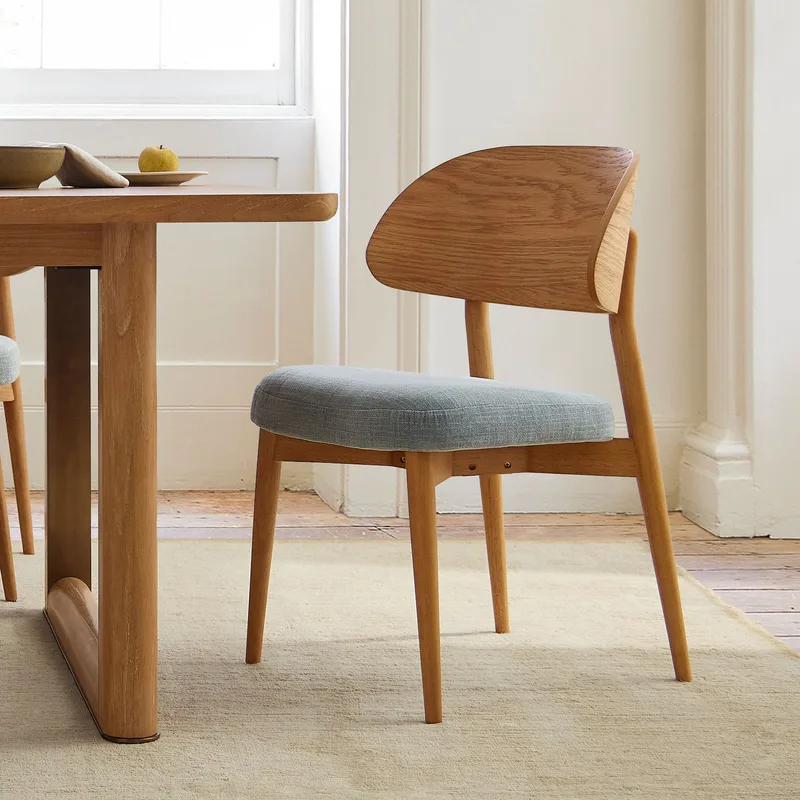
Foshanchair White Oak Bentwood Dining Chair
100% Wood · MOQ 6 pcs · $95
View model →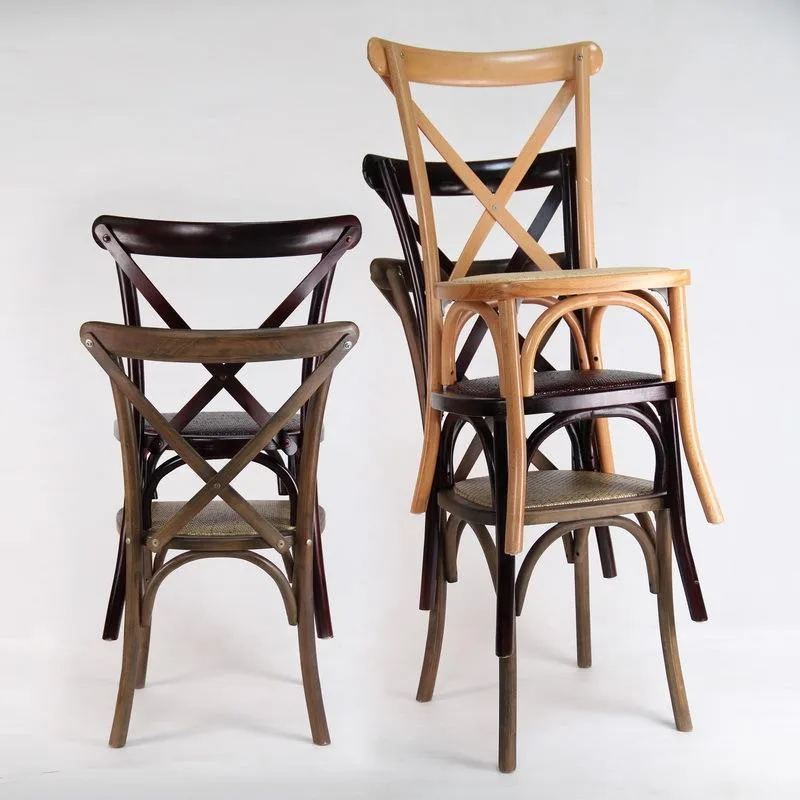 Wooden Chairs
Foshanchair Modern Bentwood Stackable Chair Rustic
Solid wood frame · MOQ 6 pcs · $45
View model →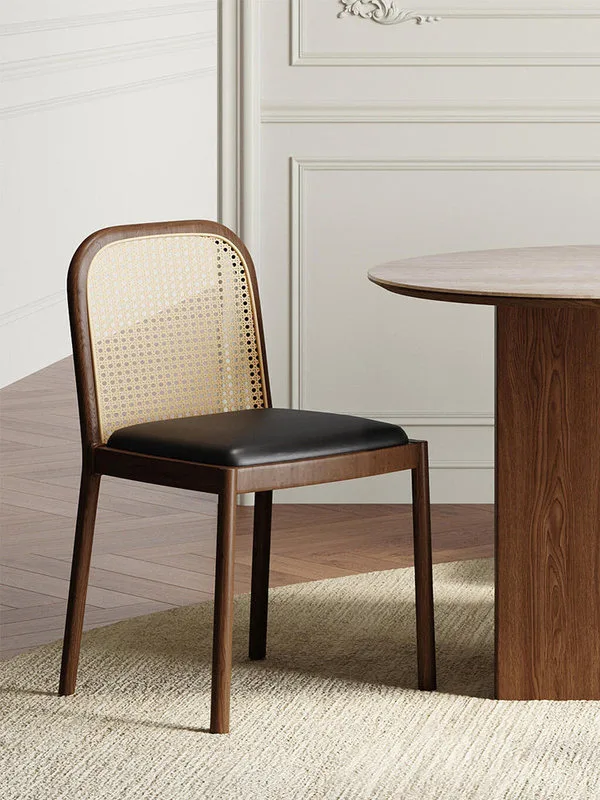 Wooden Chairs
Foshanchair Wooden Dining Chair Direct Arch
Solid wood · MOQ 6 pcs · $90
View model →