Solid Wood Chair Care: Humidity, Joints and Finish Repair
Published by Foshanchair · Chair studio in Foshan, China
Solid wood is still the default choice for restaurant and hotel dining rooms, and for good reason: it is warm, repairable and refinishable. But wood keeps exchanging moisture with the air around it, so most of the damage a venue sees is not a manufacturing fault — it is the room, the cleaning cupboard, and a joint nobody tightened. A solid wood dining chair that is wiped dry and kept in stable humidity will outlast the fit-out around it; the same chair in a draughty, heavily sanitised room with damp cloths will crack, creak and grey out within two winters. This guide covers what fails, and the routines that prevent it.
1. Why wooden chairs fail: moisture, not abuse
Wood is hygroscopic. It settles at an equilibrium moisture content set by the relative humidity around it, and every 1% change moves the timber roughly 0.2–0.3% across the grain. On a 45 cm seat rail that is several millimetres of seasonal movement, which is why chairs that leave the factory at 8–12% moisture can arrive in a dry, heated destination at 6% or in a humid coastal one at 14%. Shrinkage opens joints and gives them room to creak; swelling splits seat frames and binds any knock-down bolts; rapid drying checks and splits end grain. So control the room before blaming the chair: hold 40–55% relative humidity, keep seating away from air-conditioning diffusers, kitchen extract and radiators, and never store stacked chairs against an exterior wall in a wet climate. Our kiln-dried solid wood dining chairs are specified with that target range in mind.
2. Identify the finish before you touch it
Care instructions depend entirely on which of three finish families you own. Oil and wax sits in the wood, keeps an open pore, and can be spot-repaired by any staff member — but it needs re-oiling every 6–12 months and has little resistance to alcohol or spills. Nitrocellulose lacquer is a thin film sitting on the wood: the most common restaurant finish, and the one that rings and blooms under a standing glass or hot plate. Two-pack PU and UV-cured finishes are the commercial standard for hard daily use, tough enough for a busy dining room but almost impossible to repair invisibly. Two tests on a hidden spot settle it. A drop of water beads on a film finish and darkens the grain on oil or bare wood. A drop of denatured alcohol softens lacquer and shellac but does nothing to cured PU. Film finishes get spot repairs; oil finishes have to be blended across a whole surface, because a patch of fresh oil never matches the sheen beside it. We name the system and the sheen code on every OEM finish schedule for exactly this reason.
3. Cleaning that protects the finish
Use a damp — not wet — microfibre cloth with a pH-neutral cleaner, wipe along the grain, and dry the surface afterwards. Standing water is what leaves rings under a vase or a glass, not the wiping itself. Avoid ammonia-based all-purpose sprays on lacquer, abrasive cream cleaners, and silicone furniture polish, which builds up and causes fisheyes at refinishing. In service, four places take the punishment: the front edge of the seat, the top rail of the backrest, the armrests, and the underside of the seat where spills run and pool. Wipe all four weekly. On upholstered models blot spills rather than rubbing them in, and treat the timber frame as the load-bearing part it is. When chairs are stacked, interleaf them with felt or foam pads, never stack them damp, and respect the stack limit the maker specifies — our upholstered solid wood restaurant chairs are rated per model.
4. Tightening and re-gluing loose joints
Work through the diagnosis in order: the floor and glides first, then bolts, then the joint itself. A wobble is often one short leg glide, and a knock-down chair is often just a loose bolt. But a dried glue joint cannot be fixed with a screw. Driving a screw into seasoned hardwood beside an existing dowel splits the rail and turns a twenty-minute repair into a replacement. Re-glue instead: clean the old adhesive out of the joint, inject a D3 PVA adhesive and clamp for a full 24 hours, using a glued hardwood shim or an oversize dowel if the hole has opened up. Twist-test every chair monthly and listen — creaking is the earliest reliable warning, and it stays a cheap repair only while the joint is still intact. Our guide to chair joint construction explains what a sound joint looks like in the first place, and the full chair catalogue lists the models we build with wedged and glued mortise-and-tenon frames.
5. Repairing scratches, rings and heat marks
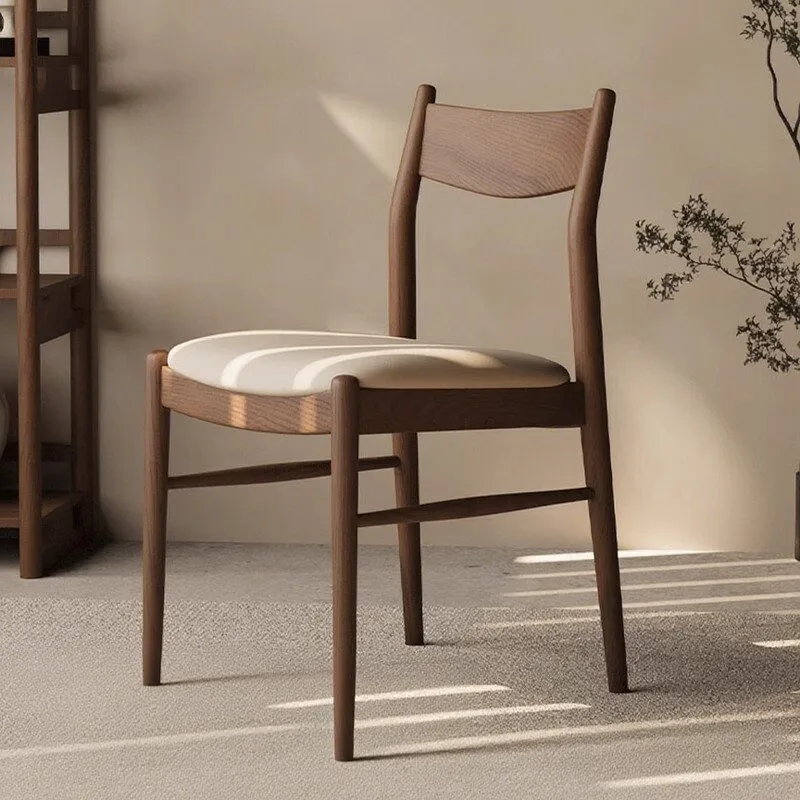
Most surface damage is cosmetic and fixable in place. A white water ring lifts with gentle heat through a cloth or a non-abrasive polish worked along the grain, then a thin coat of wax. A heat bloom from a hot plate responds to a light abrasive along the grain followed by wax. A scratch in a film finish can be filled with a matching repair crayon, levelled and blended; a scratch through to bare wood on an oil finish needs feather sanding at around 320 grit along the grain, fresh oil on the local area, and accept that the sheen ages back in. Colour matching is the hard part, which is why the factory touch-up kit and the finish code matter more than any technique. One structural point worth knowing before you buy: solid timber can be sanded and refinished two to four times over its working life, while a veneered panel usually survives one or two. Our solid wood dining chairs are built to be refinished rather than replaced.
6. Spares, a service calendar and PO clauses
For every hundred wooden chairs, hold five to ten per cent spare felt glides, a box of matching screws, two or three touch-up and re-oiling kits, replacement cane or webbing panels if the model uses them, and one spare upholstered seat cushion per twenty seats. Then set a rhythm: daily wipe of touch points, weekly full clean and visual check, monthly twist test and glide inspection, quarterly re-oiling of oil-finished chairs and re-torquing of all fixings, and an annual deep clean with touch-ups. Store off the floor at 40–55% humidity, and never leave chairs wrapped in plastic long term, because it traps moisture and grows mould. Finally, specify it in the purchase order — species and grade, moisture content at shipment, the finish named as a standard rather than a colour word such as "matte", the touch-up kit and finish code shipped with the order, an agreed spare percentage, and the maintenance regime the finish is designed for. Read more about our Foshan factory or ask for a finish schedule with your quotation.
Conclusion
Solid wood chairs rarely fail from being sat on. They fail from humidity swings, liquid left standing, and joints that were allowed to creak for a year. Control the room, wipe dry along the grain, twist-test monthly, re-glue early rather than screwing late, and keep the finish code and a spares kit on site. Foshanchair builds solid wood dining and restaurant chairs in ash, oak and walnut to a named finish standard, and ships touch-up kits with the original order — request a quote with your seat count, or browse the wooden chair range.
Related: Chair Joints: What Buyers Should Inspect · Restaurant Chair Maintenance Guide
Models we build for this
Factory-direct pricing, custom finish and fabric, MOQ from a few pieces.