Restaurant Chair Trends 2027: What to Order
Published by Foshanchair · Chair studio in Foshan, China
Trends appear in the order book long before they reach a showroom. Over the past twelve months we have watched which finishes, profiles and frame types importers, hotel groups and restaurant chains actually put into samples and repeat orders, and six themes keep repeating for 2027. None of them is a revolution. They are shifts in finish, geometry and space that change what you write into a specification, how you plan spares and how many units fit a container. Here is what is moving, and what each shift means for buyers of commercial restaurant chairs.
1. What the 2027 order book actually shows
Fashion moves faster in press releases than in factories. The reliable signal is what buyers reorder after a first container has been in service for a season, and that is where these six themes come from. Three variables explain most of the movement: finish, geometry and space. Finish decides how a chair photographs and how it ages; geometry decides comfort and stacking; space decides how many seats fit in the room and in the carton. Region still matters, so read these as directions rather than rules. European hospitality buyers lean hardest into natural timber, while Middle East and North American retail buyers order brighter metal and larger silhouettes. Use the list to build a range with a clear best-seller, a mid-tier model and one statement piece, rather than betting a whole container on a single look. Our chair catalogue is organised by frame family for exactly that comparison, and the Foshan workshop builds all six families under one roof.
2. Warm timber and natural finishes
Oak, ash and walnut keep displacing high-gloss lacquer, and the finish is increasingly a low-sheen oil or a matte open-pore lacquer that lets the grain show. Wire-brushed and lightly sandblasted surfaces dominate the premium tier because they read as aged rather than machine-perfect. The consequences are practical. Oiled floors need re-oiling every twelve to twenty-four months in heavy use, so order a matching touch-up kit and record the oil product on the purchase order; matte lacquer is more forgiving but shows water rings if spills are left. Ask for the moisture content of the timber, ideally 8–12% for export, and keep one species and one colour batch per order, because a second batch six months later will not match exactly. Our solid wood chair range is built on kiln-dried hardwood frames, and the solid wood buying guide covers species selection in detail.
3. Curved backs and rounded geometry
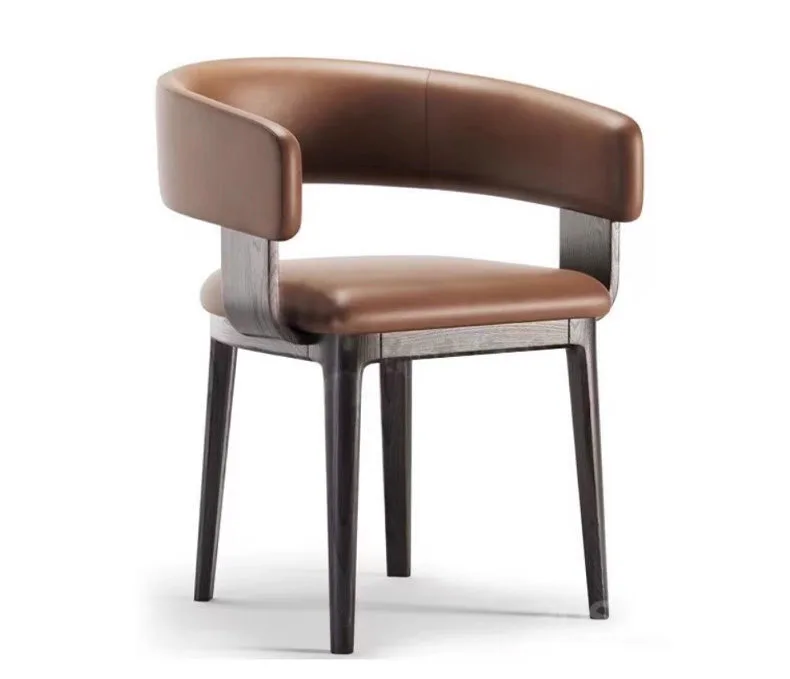
Barrel backs, horseshoe arms and softened seat edges are the most visible design shift. Curves photograph well and hold guests longer, but the construction behind the curve matters more than the curve itself. Steam-bent solid timber gives the tightest radius and the best long-term stability at a higher cost; laminated bent plywood and moulded shells are lighter, cheaper and the usual choice for volume programmes. Whatever the method, check the radius on the approved sample and confirm the curve does not pinch the seat. A 45 cm seat that narrows to 38 cm at the back edge loses the comfort the curve was meant to add. Curves and stacking rarely coexist either: a curved back usually stops a chair stacking more than four or five high. Compare the profiles in our leisure chair range, or look at a curved back dining chair with ash legs to see how the geometry reads on the floor.
4. Matte metal and low-glare stainless
Chrome and mirror-polished steel are losing ground to fine-texture matte black, anthracite and graphite powder coat, which hide the fingerprints and scuffs that show immediately on a gloss finish. Where steel is used, buyers increasingly specify brushed rather than mirror surfaces for the parts guests touch, keeping bright metal for accents only. Specify powder coat at 60–100 microns dry film thickness over a properly pre-treated frame, with welded joints ground smooth rather than left with visible spatter. For indoor restaurant use, painted steel or 304 stainless is usually enough; coastal and terrace projects should move to 304 or 316 stainless with A2 or A4 fasteners. Matte finishes do not repair invisibly, so specify a touch-up bottle in the order colour code with every container. Both directions are covered in our iron and metal chair range and the stainless steel chairs we build for these finishes.
5. Upholstery moves to texture, not pattern
Patterning is out and texture is in. Chenille, bouclé, woven webbing and slubby linen-look yarns give visual interest without committing a venue to a motif it will want to change in two years. For contract use, specify a fabric with a Martindale rub count of at least 40,000 and confirm the flammability certificate your market requires, whether that is BS 5852 Crib 5, EN 1021-1/-2 or California TB 117. Two practical points follow. Order removable covers with zips plus one spare cover per twenty seats, because a cover replaced from a different dye lot will never match under restaurant lighting. And keep seat foam at 30–35 kg per cubic metre or above; softer foam compacts into a hard rim within a season. Our chenille cafe chair is typical of the direction, and the upholstery options guide explains how to write the specification.
6. Space efficiency and hybrid seating
Footprint is the quiet trend. Chairs are marginally narrower, backrests a little more vertical, and legs set inboard so more seats fit along the same banquette run. Hybrid floors, where a bench or banquette runs along the wall with loose chairs on the open side, are now standard in new restaurant fit-outs because they raise seat count without crowding circulation. For buyers this changes the shape of the order: fewer identical units, more mixed types in one shipment, and a larger share of frames that stack four to six high or nest. If the venue is above ground level or the lift is small, consider knock-down frames, which cut shipping volume by roughly 30–45% at the cost of assembly time on site. Storage maths matter as much as seat maths, so read our guide to stackable chairs and storage before you fix the quantities; our stackable frames sit across the metal and wood categories.
Conclusion
Six shifts, one instruction: choose two or three of them for your range and let the rest wait. Warm timber, curved geometry, matte metal, textured upholstery and tighter footprints cost more in specification discipline than in unit price, and that discipline lives in the purchase order — finish code, fabric dye lot, coating thickness, spare parts. If you are planning a 2027 range, ask for finish and fabric samples first, prototype the model that carries the trend, and keep the other tiers conservative so spares and reorders stay simple. Foshanchair develops ranges from sketch to sample with OEM and ODM runs from small MOQs — request a quote with your target seat count and we will propose a specification.
Related: Match Chair Style to Your Restaurant Interior · How Many Chairs Does Your Venue Need?
Models we build for this
Factory-direct pricing, custom finish and fabric, MOQ from a few pieces.
 Wooden Chairs
Foshanchair Modern Design Upholstered Dining Chair with Curved Back
Ash Wood · MOQ 6 pcs · $95
View model →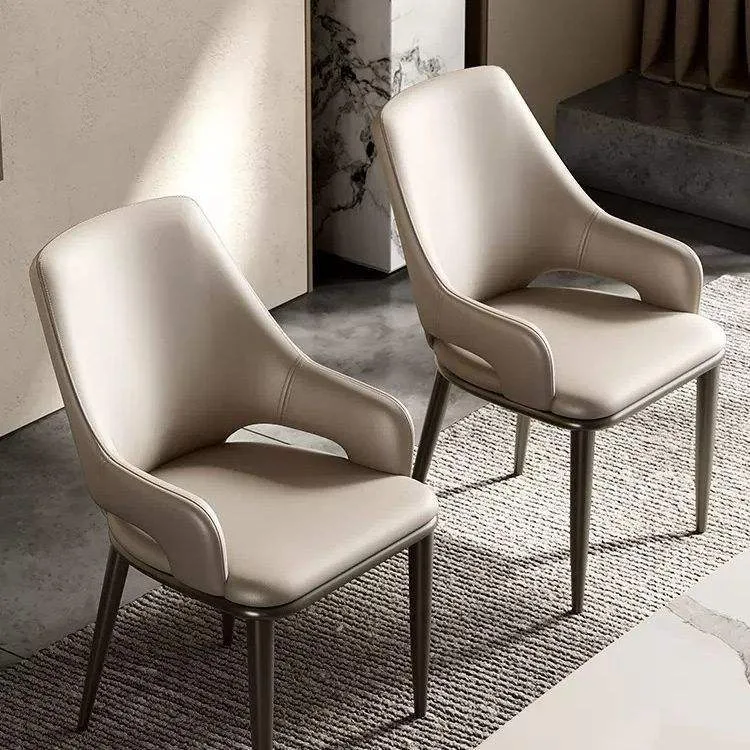 Iron Chairs
Foshanchair High Back Hotel Restaurant Designer Metal Chair
Metal / Leather · MOQ 6 pcs · $24
View model →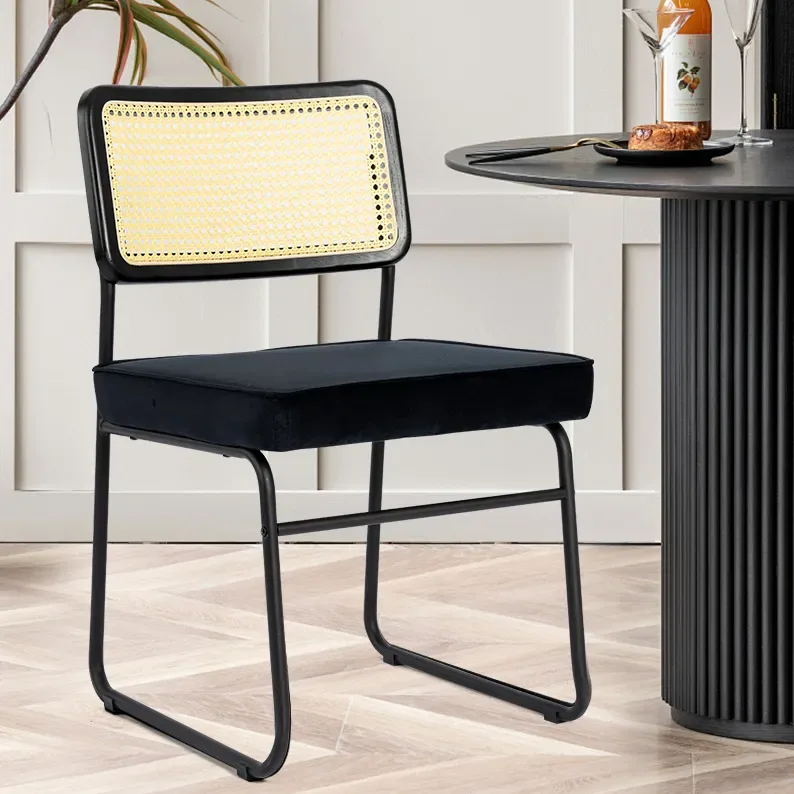 Commercial Restaurant Chairs
Foshanchair Nordic Chenille Fabric Metal Leg Cafe Chair
Chenille Fabric · MOQ 6 pcs · $50
View model →