Woven Chair Seats: Cane, Rush and Paper Cord
Published by Foshanchair · Woven seat and frame workshop in Foshan, China
A woven seat is the cheapest way to make a chair look expensive, and the hardest part of it to put right afterwards. Two chairs can leave the same workshop looking identical in a photograph: one carries a pre-woven cane panel pressed into a six millimetre groove, the other is hand-laced with three millimetre paper cord. Five years of service separates them completely. This guide covers the four weave families used on our solid wood chair range, how each is anchored, what fails first, and what to write on the order.
1. Four weave families, and what each is actually for
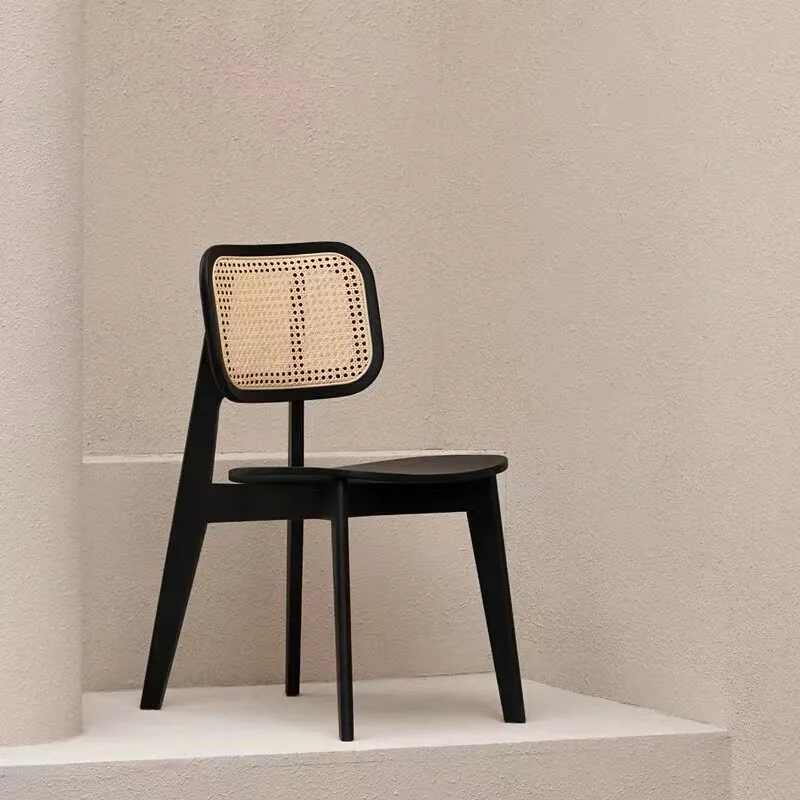
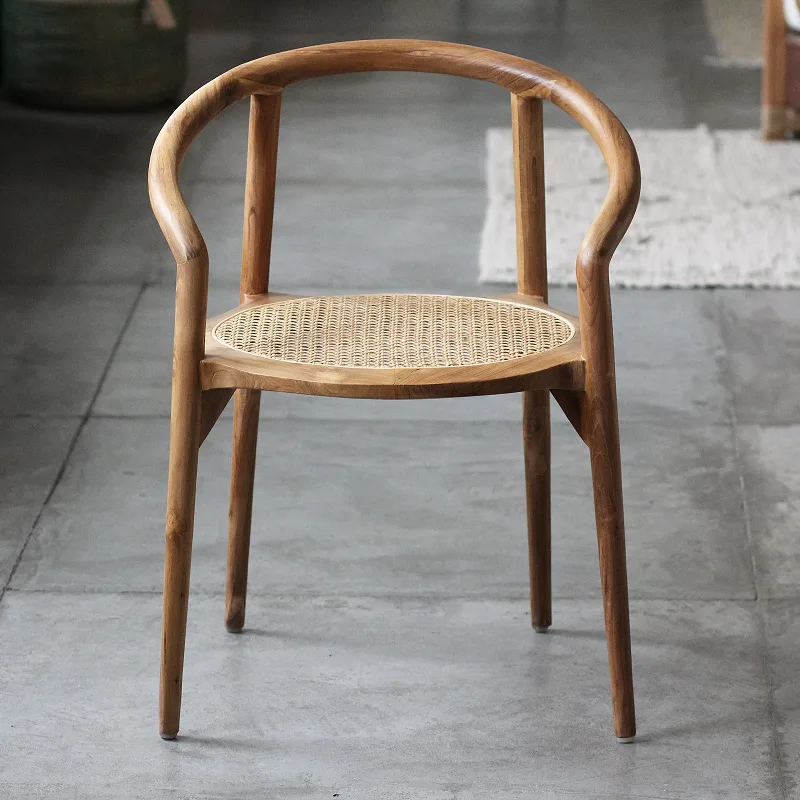
Pre-woven cane webbing is machine-woven rattan core sold in 45, 50 or 60 cm rolls, in a six-way mesh of roughly 2.5 mm strands or a finer eight-way mesh near 2 mm. It is pressed into a groove as a complete panel: the fastest way to build a seat, and the only one a buyer can realistically replace on site. Hand-woven strand cane is the traditional method, a weaver lacing each strand through holes drilled round the seat opening; it is the strongest and by far the most expensive, at three to six hours of labour per seat, and only a weaver can rebuild it. Paper cord — the three millimetre twisted kraft cord of Danish furniture — laces taut onto a hardwood frame in 45 to 70 minutes, matte and warm, but it dislikes standing water. Rush and seagrass are coarse twisted fibres, the cheapest of the group and the first to dry, crack and shed. Outside the natural family, UV-stabilised polyethylene weave is the only one that belongs on a terrace.
2. The anchor decides the lifespan, not the weave
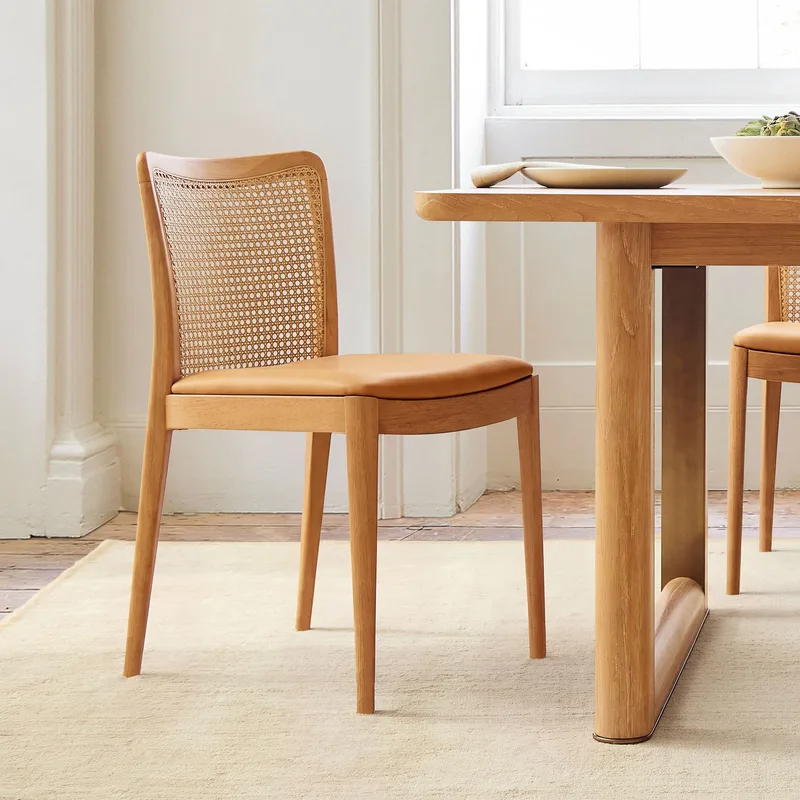
Every failure we see on a woven seat starts at the edge, where the weave meets the frame. On a panel seat, a four to six millimetre groove is routed around the opening, the panel is laid over it and a six millimetre spline is driven in with glue and staples. A shallow groove lets the spline lift in dry air; staples shot into end grain release at the corners first; a groove too close to the frame edge splits the rail. On a hand-laced seat the holes run 6 to 8 mm at 12 to 20 mm pitch, and the rail must be hardwood at least 25 mm wide, because softer species tear at the holes under load. Paper cord is knotted rather than pinned, so tension is set by the weaver's hands and cannot be corrected later. A panel stapled straight onto plywood is the first to let go. Ask for a photo of the underside in the quotation. Our vintage cane rattan restaurant chair and the natural rattan cane-back dining chair both use the grooved panel method.
3. Sag, and the five-year signature
Natural cane is hygroscopic: it settles at whatever humidity surrounds it, typically eight to twelve per cent moisture content, and each wet and dry cycle lets the strands creep a fraction. The load always lands in the same place, so the seat dishes rather than softening evenly. A venue in a humid climate goes soft at the centre by year two; a heated interior at 25 per cent winter humidity is likelier to crack the cane at the groove instead. Paper cord fails at the crossing points where it rubs the rail, and at knots that slip. Rush splits along the strand; polyethylene relaxes slowly, then embrittles. This is a predictable maintenance cost: a pre-woven panel is a 20 to 40 minute job for a repairer, while rebuilding a hand-caned seat takes three to six hours. Hold two to five per cent spare panels and record the weave code, as our seat suspension guide recommends for webbing and springs.
4. Humidity, destination and the outdoor reality
Cane leaves the factory carrying the moisture of Foshan. Packed at twelve per cent and opened in a heated interior at 25 per cent relative humidity, it dries, tightens and can split at the groove; opened in a monsoon climate it gains moisture and slackens before the first service. Two measures fix most of it: state the destination climate on the order so the weave tension can be set for it, and let the chairs acclimatise for 48 hours in the room they will serve, cartons open, before anyone sits down. In service keep interiors at 40 to 55 per cent relative humidity, away from air-conditioning diffusers and direct sun, and never stack them damp. Natural cane has no place outdoors whatever the frame finish, so for terraces specify UV-stabilised PE weave on aluminium, as in our outdoor chair range. Where the weave is decorative rather than structural, paper cord over a hardwood rail tolerates deep cushions better, which is the arrangement behind most of our leisure chairs.
5. What the weave adds to cost, weight and lead time
Weave is priced by labour, not by material. As a working band from our own quotations, a pre-woven cane panel adds roughly USD 10 to 20 per seat over a plain timber seat, hand-laced strand cane USD 30 to 50, paper cord USD 20 to 35 and PE weave USD 8 to 18. Finished prices follow: USD 88 for the cane rattan restaurant model above, USD 90 for a rattan cane armchair, USD 95 for the cane-back chair, USD 120 for an ash frame with a real rattan back. Woven seats weigh less than upholstery, so a container takes more pieces and freight per chair falls — but the weave then needs protecting in the carton, because a stacked leg will crush it. Standard panels ship from stock in three to five days, hand-caning adds ten to fifteen days on volume, and a custom weave runs to about twenty. Custom weave schedules are quoted as a line item through our OEM service.
6. Eight lines for the order, ten minutes on the sample
The order needs: weave type and strand diameter; panel or hand-laced construction; groove width and spline if it is a panel; rail species and minimum width; colour and topcoat on the cane; a deflection acceptance figure; spare panels as a percentage with the weave code; and moisture content at packing. Verify on the sample, not the drawing. Count strands across 100 mm. Look into the groove at all four corners for staples driven into end grain. Press the centre with a thumb: a new seat should give eight to twelve millimetres and spring back, and a panel that drums hollow is over-tensioned. Run a finger round the inside rim; if the edge cuts, the spline sits proud. Sit on it for ten minutes. Compare the panel with the approved sample in daylight, because cane bleaching varies from batch to batch, and confirm the spare is from the same batch. Then protect it: a card pad over every woven seat, no more than four to six stacked without interleaving. Our sample approval checklist covers the rest, and our factory will photograph the groove before shipment.
Conclusion
A woven seat is a specification, not a style. Name the weave, the strand diameter, the anchor and the climate it ships into, and cane will outlast two rounds of upholstery at a fraction of the cleaning cost. Leave those to the catalogue photo and you will be buying panels in year three. Send us the model, the quantity and your destination port and we will return a woven-seat specification with the quotation, including the spare panel price.
Related: Chair Seat Suspension: Webbing, Springs and Sag · Solid Wood Chair Care: Humidity, Joints and Finish Repair
Models we build for this
Factory-direct pricing, custom finish and fabric, MOQ from a few pieces.