Arm Chairs vs Side Chairs: What to Specify
Published by Foshanchair · Seating programme desk in Foshan, China
Arm or no arm is usually settled in the last five minutes of a seating meeting, and it is the decision that changes how many covers a room actually holds. At Foshanchair we quote both versions off the same frames, so at model level the choice is rarely about price — it is about footprint, table clearance and the joint that carries a guest’s weight when they push down to stand. This guide gives the numbers to check on a sample, the clauses to write into the order, and the mix that works for a dining room, a hotel breakfast room and a lounge. Both versions sit side by side in the chair catalogue.
1. The difference is footprint, not comfort
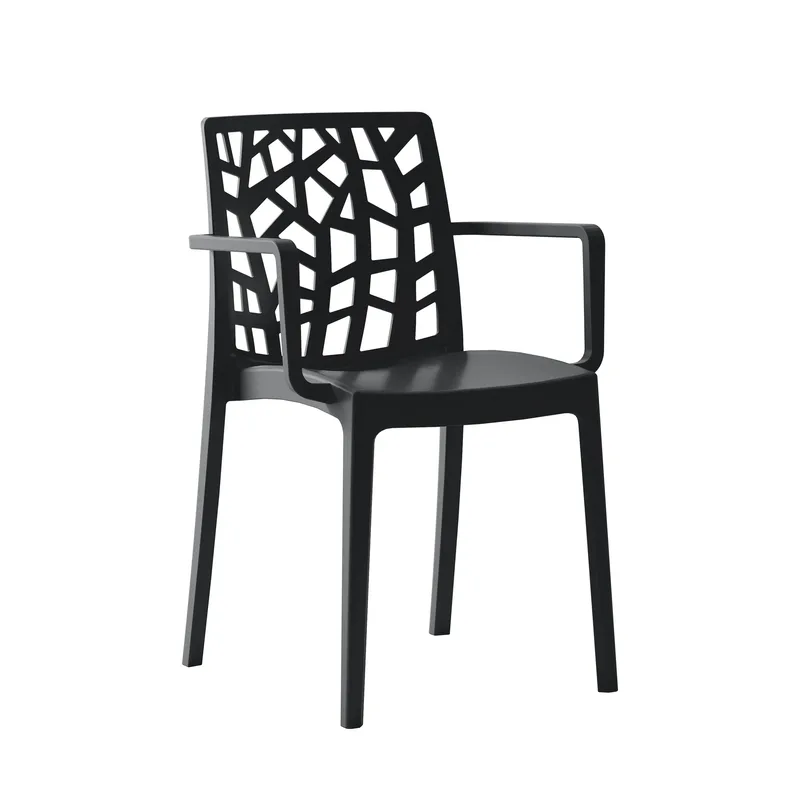
An arm chair is 10–15 cm wider than the side chair it shares a frame with. Overall width runs 44–50 cm for a side chair and 54–62 cm for an arm chair, and at 60 cm per cover along a table edge that gap decides the floor plan. A 240 cm table seats four a side with side chairs; with arms it seats three, because arms cannot overlap. The same arithmetic hits the service aisle, where staff need 90–120 cm clear behind a seated guest, and bar returns, where an arm fouls the counter corner. Measure the room before the catalogue: count covers at 55 cm and 45 cm centres in the restaurant chair range and choose the version that keeps the seat count you were hired to deliver.
2. Table clearance and the 20 mm that matters
Arms also change where the chair sits relative to the table. A dining table is 750 mm high with an apron whose underside lands at 670–700 mm, and dining arm heights run 620–680 mm from the floor, so a well-shaped arm passes under the apron while the guest’s hands stay above it. In practice the chair cannot be pushed fully in — expect it 80–120 mm further out than a side chair, which is what turns a comfortable four-top into a tight one. Check the pair together: seat top to tabletop at 270–300 mm, arm clearing the apron by 20–30 mm in the working position, and the front leg missing a pedestal base. Our seat count planning guide has the per-cover widths.
3. Arm height, clear width and the getting-up test
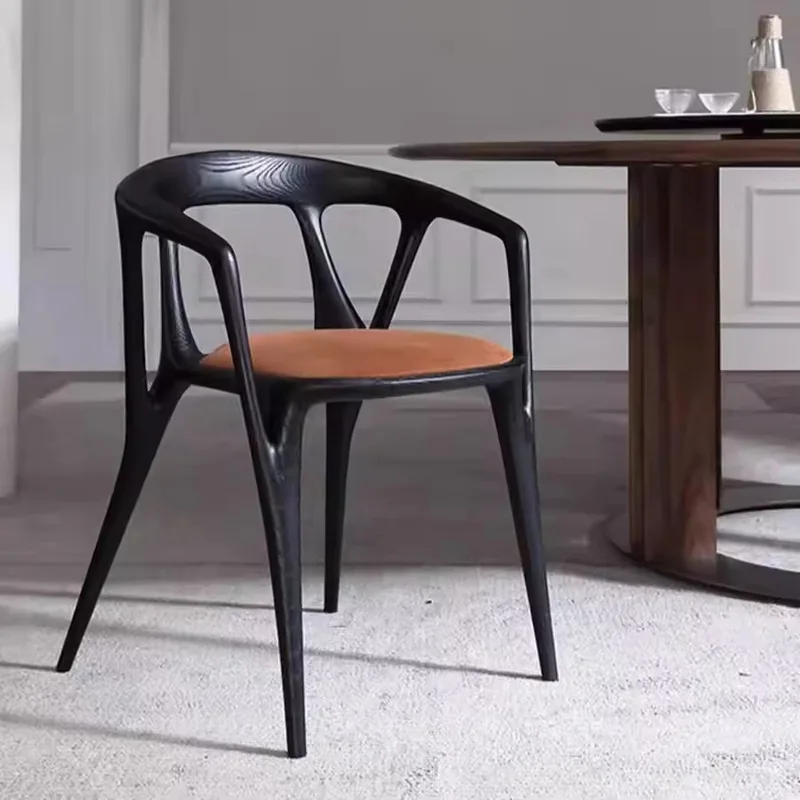
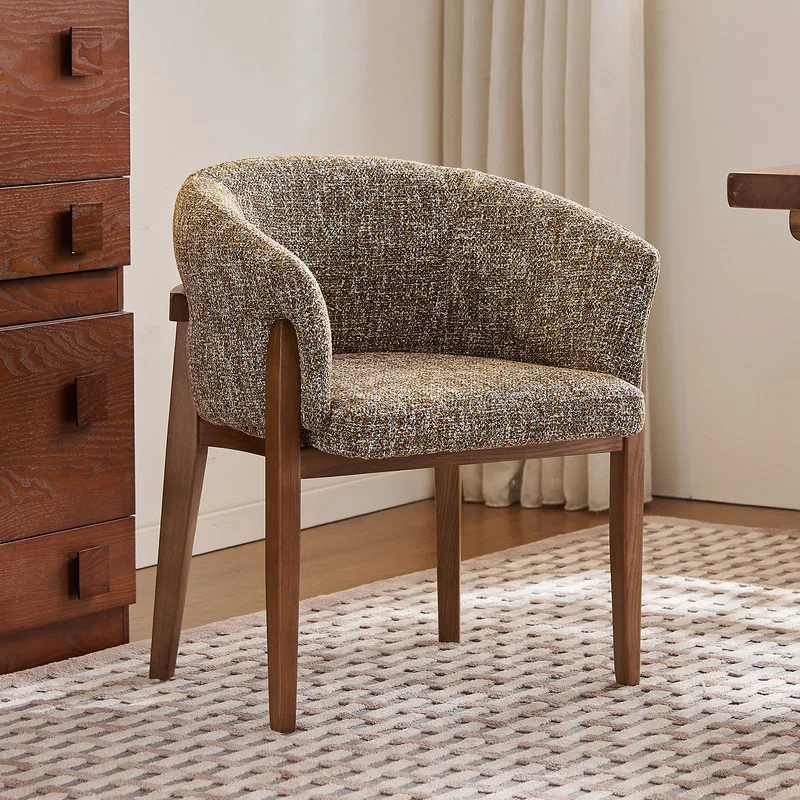
Two measurements matter more than styling. Arm height should be 620–680 mm for dining and 580–640 mm for lounge seating — high enough to push against when rising, low enough to slide a thigh under. Clear width between the arms needs 460 mm minimum, 480 mm if guests keep coats on, and arm length is normally 350–450 mm forward of the back post, open or closed at the front. Arm tops run 40–50 mm wide; anything narrower digs into a forearm through a long dinner, and a padded top adds a wear point that needs its own repair plan. That geometry is the real argument for arms: the chair costs a guest less effort to leave, which is why hotel breakfast rooms, care settings and foyer lounges run all arms while fast casual runs none. Sit, slide forward and stand without touching the table on the sample — if the tester reaches for the tabletop, the arm is too low. Lounge versions are in the leisure chair range.
4. The arm joint is the first thing to fail
An arm is a lever, and the joint is where it fails. A guest resting 30 kg on the outer front corner of a 350 mm arm puts a moment into the back post several times a normal seat load, delivered as a repeated off-axis pull rather than a clean vertical press. Dowel and glue alone survives a showroom and splits within a season of contract use; the durable pattern is a through-bolt or steel bracket tying arm, back post and seat rail into one unit, with the head plugged. Ask what holds the arm, then press hard on the front corner 30 times and listen: a creak that appears by the tenth press is a joint moving, not the floor. Our guide to chair test standards explains how to read the arm load clause instead of just filing it.
5. Stacking, storage and freight volume
Arms cost space behind the house as well. Stacking side chairs go 8–12 high; the same chair with arms stacks 4–6, and often only when the arms are shaped to nest rather than square-cut. Packed volume runs roughly 0.10–0.14 CBM per side chair against 0.16–0.22 for an arm chair with 1.5–2.5 kg more weight, so a 40HQ taking 600–750 side chairs takes 380–450 with arms. That is worth checking before promising one shipment for a whole venue, and worth re-checking if the plan mixes both. Order the arm version as its own model rather than assuming a side chair frame with arms bolted on packs the same; the stackability and storage guide has the stacking maths.
6. Cost per seat and the mix that works
The price gap is smaller than the footprint gap: $6–20 per chair in solid wood and $4–12 in powder-coated steel or PP for the same seat and finish. The number that matters is cost per cover, where arms at 55 cm instead of 45 cm can cost one seat in five. That usually argues for a mix: all side chairs for fast casual and counter seating, 15–25% arm chairs for hotel breakfast rooms, waiting areas and the ends of long tables, and all arms only where the guest profile needs them. Write six lines into the order — overall width, arm height, clear width between arms, arm length, joint construction, and the arm load clause from the report. Ask for the per-model delta rather than a blanket percentage, because the gap sits in the joint and the extra rails, not in the finish. Our OEM team keeps both versions on one leg and rail set so a mixed order ships in one finish batch; wooden options are in the solid wood chair range.
Conclusion
Arms are neither an upgrade nor a downgrade. They are a different seat count and a different joint, and both are decided before anything is quoted. Work from the room plan and the guest profile, then put width, arm geometry and joint construction in writing. Send us your layout and quantities and we will price the side chair and the arm chair versions of the same model, so the trade-off shows up in numbers rather than opinions.
Related: How Many Restaurant Chairs Do You Need? · Stackable Restaurant Chairs: Storage and Transport
Models we build for this
Factory-direct pricing, custom finish and fabric, MOQ from a few pieces.